[NOTE: Brief demographic and psephological analysis of Doña Ana County is shown at the bottom of this article.]
The June 5th Primary
THE COUNTY COMMISSION 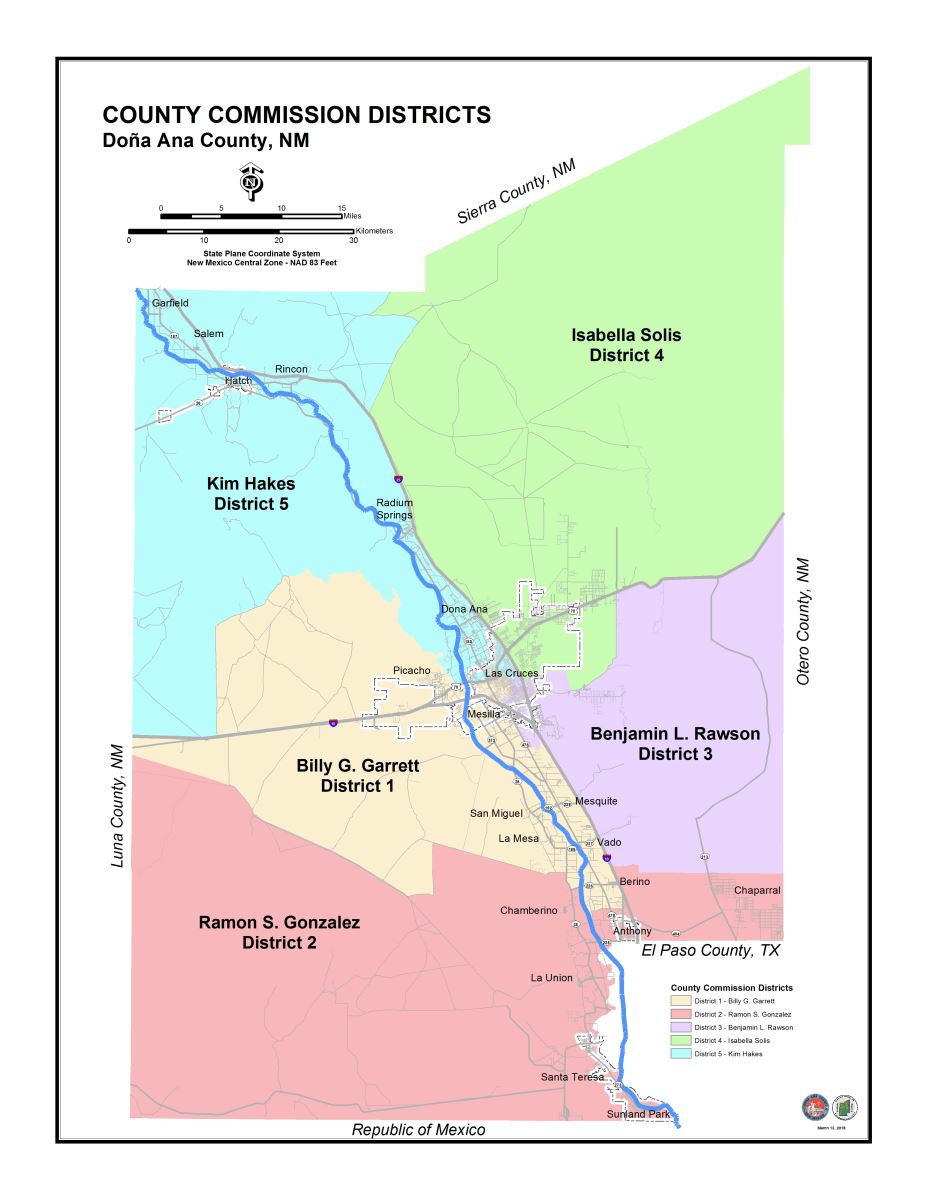
District 1: Open Seat in Gerrymandered District
District 1 is centered generally on the southwest part of Las Cruces, extending some 15 miles west and southwest from town. Billy Garrett won the seat in 2010 by a margin of 290 votes (4,844 to 4,554) over John Zimmerman. In 2014, Zimmerman went on to become a one-term state representative before being knocked out of office in the Republican House Caucus's debacle of 2016.
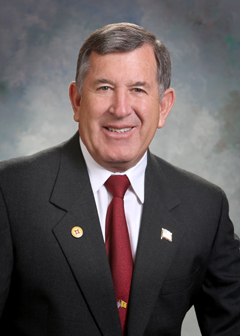 Meanwhile, Charles Wendler took on Garrett in 2014, getting beat by about 1,350 votes, while Susana Martinez was carrying the district by 111.
Unbeknownst to the GOP, in the 2011 redistricting, the county commission had heavily gerrymandered the district, reducing Republican strength by a net 1,200 votes—in other words, had the same district been in effect for Martinez's reelection, she would have carried it (the original District 1) by some 1,300 votes instead of 111.
So this year, John Zimmerman is making a second run at this commission seat. He had to overcome fellow Republican, Roberto Martinez, 820 to 195, to get the nomination. But as discussed, Zimmerman faces a much steeper uphill battle than he did in his first try eight years ago.
In 2016, Clinton beat Trump here 8,243 to 4,839, with Johnson and the others getting 1,427. Nora Espinoza ran 25% ahead of Trump in the district, but still got beat 8,144 to 5,841. What this means is after the 2011 gerrymander, it's going to be tough for a Republican to win it.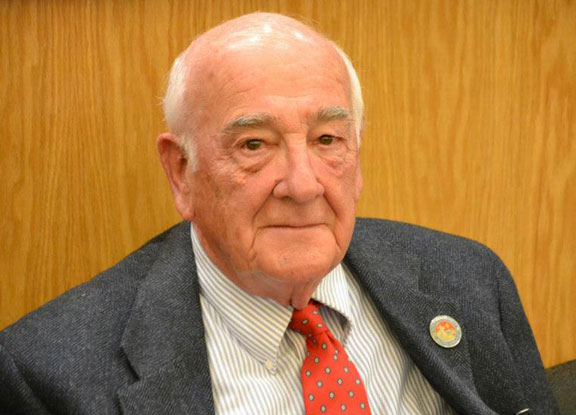
Sensing a relatively easy hold, five Democrats jumped into the race. The lone Anglo, the famed Gay marriage activist Lynn Ellins, beat the four Hispanic candidates by getting 37% of the vote. He will be heavily favored in November.
Commission District 1, Democratic Primary
| CANDIDATE |
Votes |
% |
| Lynn Ellins |
1,076 |
37.01 |
| Antoinette M. Reyes |
690 |
23.74 |
| Arturo Uribe |
364 |
12.52 |
| Orlando Jimenez |
562 |
19.33 |
| Eugene Charles Alvarez |
215 |
7.40 |
| TOTAL VOTE |
2,907 |
100.00 |
 District 3: The Only Elected Republican
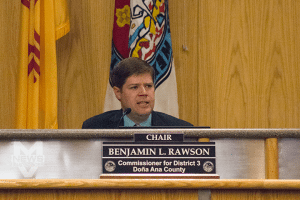
Incumbent Ben Rawson, the only elected Republican county official this decade, won this seat in 2014 by a margin of 118 votes, slightly better than Governor Martinez's 92-vote margin in the district. Ironically, District 3 was actually the worst of the five districts for Martinez that year, as she carried all five of them, including the one pegged to Sunland Park. This made Rawson's achievement all the more significant. 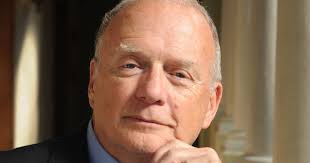
The bad news came in 2016 with Trump polling only a third of the vote, losing to Clinton by 20 points, or a margin of 2,800 votes. On the vaguely encouraging side, Judith Nakamura did much better during that same campaign, losing 6,088 to 7,606. Can a born-and-raised Las Crucen make up the 1,500 votes that Nakamura lost by? It will be a tough go, but Rawson has gained a strong reputation for common sense, leadership, and making a positive impression on the voters. He has a chance, though a difficult task ahead.
Rawson's Democrat opponent sports the gender-ambiguous first name, Shannon, as in Shannon D. Reynolds. Though 85% of the Shannons in America are female, this candidate is male. In our view, this adds to Rawson's challenge in that female candidates have enjoyed a statistical edge in New Mexico going back over 20 years. Reynolds and Rawson won their primaries unopposed.
District 5: Another Gender Bender First Name in an Open Seat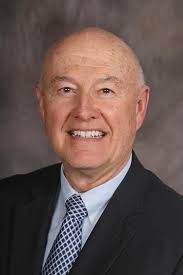
District 5's Democratic County Commissioner John Vasquez felt forced to resign this past winter. Many Democratic Party observers see Vasquez as having been yet another victim of the ongoing efforts of the newcomer, Anglo-dominated "progressive" wing of the Democratic Party. In their view, the progressives are tightening their grip by systematically forcing out what they regard as old-line "traditional" Hispanic politicos.
In any case, Vasquez was forced out and Governor Martinez appointed retired banker Republican Kim Hakes to fill the vacancy. Hakes, who lost to Vasquez in 2016, won the Republican primary unopposed. As with the case of Shannon Reynolds, Kim may benefit from the ambiguity of his first name as 84% of Americans named Kim are female, which as pointed out above, is advantageous. (In 2016, Hakes ran as "Kimberly," a name which census records show is correlated with females 99.63% of the time.)
Governor Martinez carried this district with 57% of the vote in 2014, however, Trump got only 40% two years ago. Somewhat more encouraging, however, both Nora Espinoza and Judith Nakamura got nearly 48% of the vote as .jpg) Trump was being thumped. The bad news is that both Espinoza and Nakamura ran about 500 net votes ahead of Hakes. Bottom line is Hakes has a chance, but he's really going to have to step it up over his last effort.
Trump was being thumped. The bad news is that both Espinoza and Nakamura ran about 500 net votes ahead of Hakes. Bottom line is Hakes has a chance, but he's really going to have to step it up over his last effort.
On the Democratic side, Karen M. Trujillo ran extremely impressively, getting a big majority in a four-way race, walloping well-known frequent candidate Oscar Vasquez Butler as well as Dickie Apodaca, beating each by margins approaching 3 to 1. She appears to be formidable.
District 5, Democratic Primary
| CANDIDATE |
Votes |
% |
| Oscar Vasquez Butler |
458 |
17.51 |
| Karen M. Trujillo |
1,403 |
53.63 |
| Manuel A. Sanchez |
199 |
7.61 |
| Dickie Apodaca |
556 |
21.25 |
| TOTAL VOTE |
2,616 |
|
SHERIFF
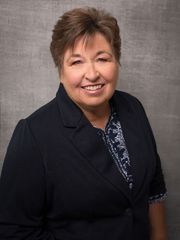 Incumbent Democrat Sheriff Enrique Kiki Vigil was defeated in the Democratic Primary, finishing third in a five-person race. The winner was Kim Kristine Stewart, seeking to become New Mexico's second female sheriff (DeBaca County has the first). The Republican she will face is former two-term sheriff Todd Garrison. Garrison was narrow victories in 2006 and 2010, bucking the county-wide trend each time. He won by about 1,500 votes while the average Republican candidate was losing by 3,500 votes.
.PNG)
But the county has become more favorable to Democrats in the interim, with average Republican losses about 7,000 instead of 3,500. Garrison faces an uphill battle.
| CANDIDATE |
Votes |
% |
| Larry Anthony Roybal |
726 |
6.06 |
| Edward Eddie Lerma |
3,368 |
28.06 |
| Enrique Kiki Vigil |
3,141 |
26.17 |
| Kim Kristine Stewart |
3,810 |
31.74 |
| Carlos H. Preciado |
958 |
7.98 |
| TOTAL VOTE |
12,003 |
100.00 |
District Court Judge
An opening on the 3rd Judicial District Court attracted a crowd. Grace B. Duran won a 5-way Democrat primary, and did so impressively, more than 1,500 votes ahead of her closest competitor, and way ahead of the field. No Republican filed.
Democratic Primary
| CANDIDATE |
Votes |
% |
| Jeanne H. Quintero |
1,284 |
11.36 |
| Isabel D. Jerabek |
1,227 |
10.85 |
| Richard M. Jacquez |
2,745 |
24.28 |
| Dania R. Gardea |
1,747 |
15.45 |
| Grace B. Duran |
4,301 |
38.05 |
| TOTAL VOTE |
11,304 |
100.00
|
Magistrate Judge, Division 1: An Update
Embattled Magistrate Judge Samantha Madrid (see story below, "Debacle") appears to have had a happy ending to her troubles. Last Thursday she filed as an independent candidate for her own seat, and no one else filed. So she is on her way to re-election unopposed in November as an independent. Our guess is she will re-register (yet again) as a Democrat next year, and she will stay hitched to the majority party in Doña Ana County—regardless of how the DA's office treats her.
Doña Ana County (pop. 209,233). County Seat: Las Cruces (pop. 97,618). Major Towns/Villages: Sunland Park (pop.14,106); Anthony (pop. 9,360); Mesilla (pop. 2,196) and Hatch (pop. 1,648). Other Census Designated Places (CDP): Berino, Chamberino, Chaparral, Doña Ana, Fairacres, Garfield, La Mesa, La Union, Mesquite, Organ. Placitas, Radium Springs, Rincon, Rodey, Salem, San Miguel, San Pablo, San Ysidro, Santa Teresa, University Park, Vado, and White Sands.
Doña Ana County is the second largest population center in the state. It has the state's richest farming valley, and is among the nation's leaders in the cultivation of pecans, with alfalfa, cotton, chiles, and various vegetable crops also grown. With a fertile agricultural valley, and being the home to the state's Land Grant university along with its location at the junction of I-25 and I-10, near both El Paso and Ciudad Juarez, Las Cruces and Doña Ana County enjoy advantages for growth not found in most of New Mexico.
Voting Behavior
Politically, the county has leaned heavily in favor of Democrats for several decades and is continuing a fairly strong trend that is even more favorable to them. However, as recently as 2014, Republicans found surprising support here—at least at the statewide level—when Governor Susana Martinez (a Las Cruces resident) Secretary of State Dianna Duran, and Attorney General candidate (also from Las Cruces) won narrow victories in the county. Locally, however, it has been tough-sledding for Republicans, and it's getting tougher.
2014
2014 was an anomaly. A little more than two weeks before the election, Obama hit a 40% approval rating, the lowest of his presidency to that point. Among likely voters, Republicans led the generic ballot 50-43 (an overwhelming margin for them) and among independents, they led 51-32. Democrats were not enthused about the ineptitude of Obama and were not motivated at all to turn out, and they did not do so—either nationally or in New Mexico. Yet, despite the incredibly favorable national mood, Republicans in Doña Ana County were unable to muster a single county-wide win for a local candidate and only three statewide wins out of eight races, and even those were by modest margins.
2016
And as the 2016 election revealed, it is going to be difficult for Republicans going forward. It appears that the average result — for federal offices, statewide offices, and local offices — is settling in at about 57-43 advantage for the Democrats. Republicans have won some closely contested districted races, but that's about the extent of their recent success.
2018 PRIMARY
Magistrate Judge: A Debacle in Divison 1
All seven of the county's magistrate judges are Democrats, and because they are all elected at-large no Republican even challenges them. But last year one of the incumbents, Division 1 Magistrate Samantha Madrid, went to the Motor Vehicle Division office to get a new driver's license. To comply with national voter registration laws, MVD has to ask visitors if they want to register to vote or update their registration.
We are told that Judge Madrid was miffed at the local Democrat District Attorney's office for repeatedly bumping her from cases—apparently, she is perceived by that office as not a particularly stellar jurist. She also was steamed that the local Democrat establishment did not back her up in what is something of a low-level simmering dispute. So, for four minutes (it's on video) in front of an MVD touch screen, Madrid decided to register "DTS." It was, by all accounts, a fit of pique.
Fast forward to filing day. Ms. Madrid files for the Democratic Primary, but of course she's no longer a Democrat. She is disqualified by the filing officer. She protests. She goes to court — where she wins a bizarre ruling from a state district court, ordering the Secretary of State to place her on the ballot. The Secretary of State points out that she is not the filing officer, the county clerk is, and that she has no authority to place Madrid's name on the ballot. Ultimately, the case ends up at the Supreme Court which, without even needing to hold a hearing, rules in favor of the filing officer and Madrid is barred from the primary ballot.
Of course it all sounds like yet another chowderhead story we sometimes find in the Land of Enchantment. But all may yet end well for Judge Madrid. This coming Thursday, June 28, is the filing date for independent candidates, which she qualifies for, for write-in candidates, which she qualifies for, and for minor party candidates, which she qualifies for. She had to choose the path that is best for her.
The signatures requirement is now somewhat more onerous. She only needed 213 signatures (according to the Secretary of State*) to qualify as a candidate in the Democratic Primary. But now, if she chooses to run as a minor party candidate she needs 413*, and if she wants to be an independent candidate she needs 1,240.*
Email us (at nmpj@dfn.com) with your feedback, comments, questions and ideas.
Intelligent Political Discourse—for the Thoughtful New Mexican