 First, Let's Look at the Lay of the Land
Democrats hold a 38-32 advantage coming into this General Election. In 2016, they knocked off five Republicans to re-capture the House only two years after the Republicans ended 60 years of Democrat control.
In 2014 the Republicans had turned a 31-39 deficit in the state House of Representatives into a 37-33 majority by capturing six seats. This was a huge feat because there are only about 16 competitive seats in the whole state. The other 54 are fairly solidly Democrat or Republican.
A Little bit of Background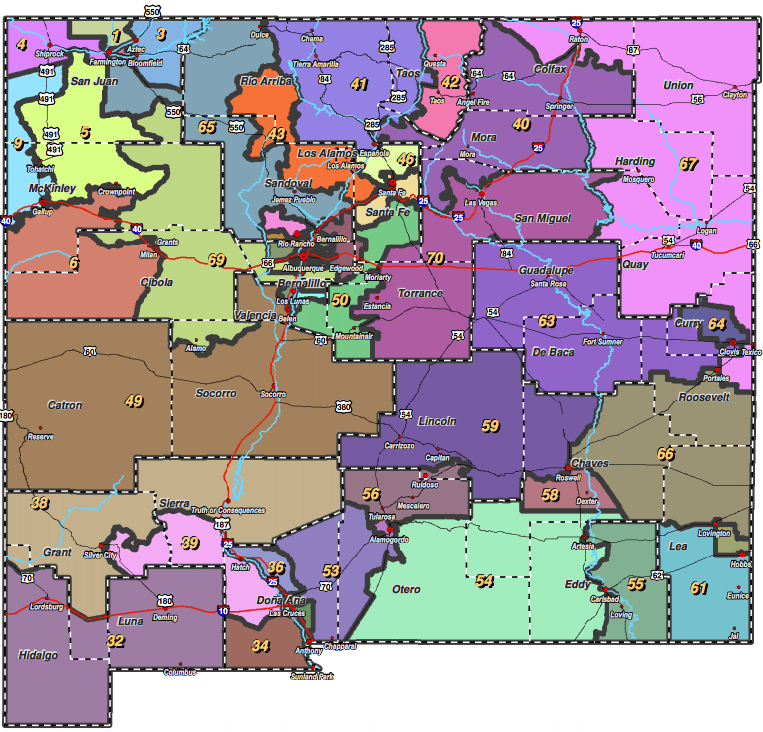
The Crucial Role of Redistricting
One major reason Republicans won control of the legislature in 2014 was the multi-cycle effort by Governor Martinez to assist legislative candidates. In 2011, she vetoed Democrat gerrymander redistricting plans, forcing the Democrats to take her to court. By hiring competent lawyers, and with the assistance of then-party chairman Monty Newman, the judge adopted the Governor’s proposed map for the State House.
2012
Then in 2012, she raised and spent over $2 million helping GOP legislative candidates. She defeated 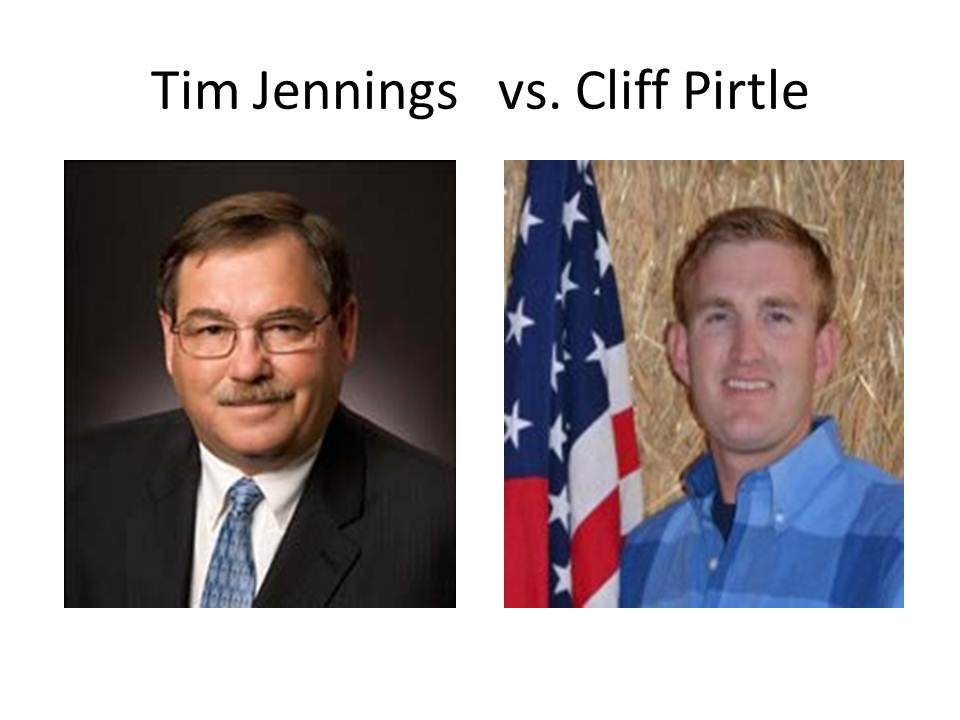 Democrat Senate President Tim Jennings, despite Jennings being supported by future GOP Committeeman Harvey Yates and other Republicans. While Republicans did not win control of the House that year, they protected enough close GOP seats that it set the table for 2014.
Incidentally, those legislative victories achieved by the Martinez Super-PAC — including the defeat of a few .jpg) progressives in Democrat primaries — led to the passage of the 2013 Tax Reform package that cut
progressives in Democrat primaries — led to the passage of the 2013 Tax Reform package that cut .jpg) corporate income tax rates and led to companies like Facebook coming to New Mexico, as well as the expansion of Intel and now the arrival of Netflix.
corporate income tax rates and led to companies like Facebook coming to New Mexico, as well as the expansion of Intel and now the arrival of Netflix.
2014
Moving to 2014, a major reason the GOP won control of the state House was a turnout operation created and driven by Governor Susana Martinez's re-election campaign and its legislative Super-PAC. We all know Democrats hold a voter registration edge in New Mexico and in most of the competitive House seats. The key to success for Republicans is to turnout Republican voters at a greater rate than their share of the registration.
In 2014 Republicans not only turned out Republicans at a level considerably above their registration share, they coupled that turnout operation with strong persuasive messaging targeted at independents and moderate Democrats. The result was not only a landslide victory for Martinez, but a net gain of those six House seats.
Martinez Decided to Adopt a Unique Role in New Mexico History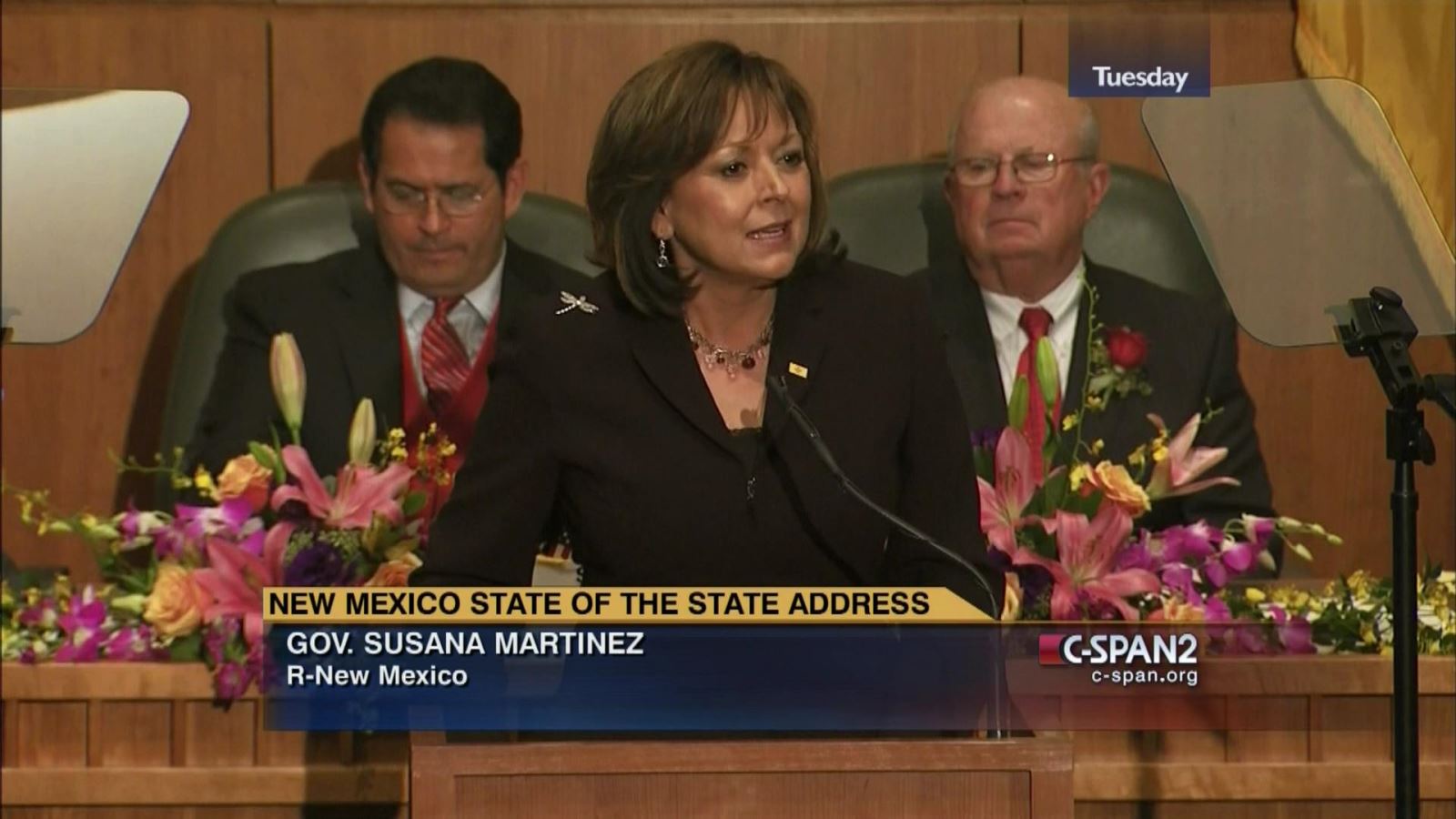
I must be noted that no governor in New Mexico history—in either party—had ever raised money for a team effort, trying to sweep other party members into office. Neither had extremely powerful and influential senators. Like most politicians, popular governors like Gary Johnson and Bill  Richardson, and popular senators like Jeff Bingaman and Pete Domenici, raised money for themselves and spent it on their own races. Martinez was cut from a different cloth.
Martinez, through her work to raise money for super-PACs like Reform .jpg) New Mexico Now, Advance New Mexico Now, and Susana PAC, along with her own campaign, not only poured several million dollars into legislative races, she brought in big-names to hold turnout rallies which she strategically placed in competitive districts. Mitt Romney appearing in Conrad James's district is but one example. Chris Christie in Sharon Clahchischiliage's district is another.
New Mexico Now, Advance New Mexico Now, and Susana PAC, along with her own campaign, not only poured several million dollars into legislative races, she brought in big-names to hold turnout rallies which she strategically placed in competitive districts. Mitt Romney appearing in Conrad James's district is but one example. Chris Christie in Sharon Clahchischiliage's district is another.
Martinez SuperPACs
Martinez's independent expenditure committees additionally sent about 15 pieces of mail in each district in support of Republican candidates—and sometimes as many as 25 to 30. She also geared her own advertising to messages that were seen as decisive in a number of Republican races. As an example, she left her "drivers' licenses" ads up for the last three weeks of the campaign, precisely because the issue was helping Republican legislative campaigns.
 Martinez Turnout Operations
Martinez also had a turnout effort that was unprecedented. It included hundreds of volunteers carrying out neighbor-to-neighbor and peer to peer, door-to-door, phone call and personal contact campaigns. She mailed hundreds of thousands of absentee ballot applications and launched the same numbers of personal phone calls.
Her operation was so successful that the Republican National Committee adopted much of what was called the "Martinez Model" for the 2016 effort headed up by Reince Priebus that turned out to be the keys to Trump victories in Florida, Pennsylvania, Michigan, Wisconsin, Iowa, North Carolina, and Arizona.
2016
For us, it appears ironic that while the Martinez Model was so effective in New Mexico that it was used nationally, certain Republican leaders like Harvey.jpg) Yates and those running the SuperPAC called "GOAL" decided they did not want to use it anymore. Yates was convinced
Yates and those running the SuperPAC called "GOAL" decided they did not want to use it anymore. Yates was convinced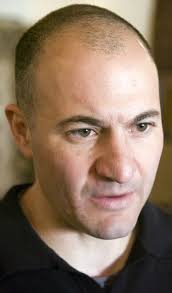 that he and Ryan Cangiolosi could run a more comprehensive and effective statewide effort. They didn't however.
Martinez Pushed to the Sidelines
Convincing House Majority Leader Nate Gentry and his assistants Representatives Rod Montoya and Kelly Fajardo that Martinez should be forced to the sidelines, Yates, Cangiolosi and the legislative leaders took charge, apparently more happy to "be in control" than to "develop a plan."
 What followed was a disaster of Hindenburg-like proportions—at least to New Mexico Republicans who had waited 60 years—60 years!—to capture the House, only to see it handed back because certain people wanted to be in charge. This has left a number of Republicans angry, but more importantly perhaps, demoralized. 60 years of work.
Martinez's Republican-supporting PACs had raised and spent over $4 million to help elect Republicans in New Mexico. That’s a jaw-dropping figure that we don’t believe that many New Mexico Republicans fully appreciate. $4 million in fundraising—to be spent on others, not herself—the only effort of its kind in New Mexico history. All of it thrown away because three or four people "didn't like" the governor.
As neutral observers, we see that as tragic. We would be of the same opinion if a similar dynamic had occurred in the Democrat Party.
2018
As for this coming Tuesday, we will see if the Republican Party of New Mexico has it in them to get out the vote. We were concerned that there was only  a little over $1,500 on hand a few days ago, and that it appeared that neither Yates, nor any of his partners, had done anything at all to replace Governor Martinez's three PACs.
Meanwhile, the main Democrat SuperPAC operating in New Mexico, "Patriot Majority," has spent nearly $2 million attacking Republicans. The secondary SuperPAC, run by the teachers' union, has spent almost $500,000 attacking Republicans.
This SuperPAC advantage has led to what we have seen in post offices around the state: Republican legislative candidates being beaten to death with daily negative mail in support of their Democrat opponents. The ratios are running 5 or 6 to 1 in favor of the Democrats. Republican candidates may survive, but the silence of the Republican Party of New Mexico, and the absence of independent expenditures on behalf of the GOP make it difficult to go on with political life.
In any case, let's take a look at the political landscape of the New Mexico House of Representatives going into Tuesday's election.
KEY DISTRICTS
The following districts have changed hands frequently over the past decade, some of them four times, some have switched back and forth three times. Most remain a part of the battleground districts.
House District 15 OPEN SEAT (Albuquerque's North Valley)
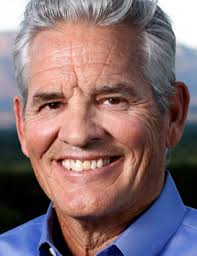 Republican Brad Winter v. Democrat Hayan Hochman
This is the old Raymond Sanchez district, won by John Sanchez in 2000, then held by Teresa Zanetti in 2002 when Sanchez stepped down to run for governor, then taken back in the Obama landslide by Democrat Bill O'Neill (now state senator), held by Emily Kane, then recaptured by Republican Sarah Maestas Barnes in 2014. Maestas Barnes won it again in 2016, but is stepping down.
The Republicans have put up Brad Winter, former Albuquerque School Superintendent, and current City Council member. As of 8 October, Winter had $18,436 on hand compared to his Democrat opponent Dayan Hochman's $51,564. As of yesterday, Hochman had outraised Winter $133k to $84k, and had outspent his Republican opponent during October $55k to $25k. He also had more cash on hand than Winter, $45k to $22k.
Two years ago, Clinton beat Trump in the district 6,904 to 5,537, with Gary Johnson getting 1,535. Trump's 38.84% was below his statewide showing of 40.04%. All observers we have spoken with believe Winter will win, based on his very high name recognition. But this could be a sleeper.
House District 23 (Part of NW Albuquerque and part of Sandoval County)
 Incumbent Democrat Damon Ely v. Republican Brenda Boatman
This seat was held by the late Republican Eric Youngberg, but was captured by Democrat Ben Rodefer in 2008, retaken by Republican Dave Doyle in 2010, held by Paul Pacheco in 2012 and 2014, until 2016, when he lost it to Ely, 7,127 to 7,022. Hillary ran more weakly here, and Trump slightly stronger than in District 15. Yet it seems Republicans may not have viewed the 105-vote loss as a key return target. On October 8, Ely had over $70k to Boatman's $11,000. And Ely has outspent Boatman $166k to $63k.
House District 24 (Albuquerque's mid-NE Heights)
Incumbent Democrat Liz Thomson v. Republican Trey Stephen Morris
.jpg) Republican congressional nominee Janice Arnold-Jones once held this seat. She was succeeded by Conrad James in 2010, but he lost it to Thomson in 2012, recapturing it in 2014, only to see it go back to Thomson in 2016 when James elected not to run again. Thomson defeated Christina Marie Hall by 600 votes while Hillary Clinton was trouncing Trump by 1,412. Thomson has outspent Morris $128k to $52k. It appears Republicans may have given up hope here.
Republican congressional nominee Janice Arnold-Jones once held this seat. She was succeeded by Conrad James in 2010, but he lost it to Thomson in 2012, recapturing it in 2014, only to see it go back to Thomson in 2016 when James elected not to run again. Thomson defeated Christina Marie Hall by 600 votes while Hillary Clinton was trouncing Trump by 1,412. Thomson has outspent Morris $128k to $52k. It appears Republicans may have given up hope here. .jpg)
In 2014, the Martinez effort held the Democrat turnout advantage to only 8 percentage points (47% to 39%) and James won the seat. That wasn't matched in 2016. And under today's RPNM turnout operation, the Democrats hold an almost 20 percentage point advantage in early voting (52% to 33%).
House District 36 (Las Cruces, and northern villages including Hatch)
.jpg) Democrat incumbent Nathan Small v. Republican David Tofsted
Democrat incumbent Nathan Small v. Republican David Tofsted
This was once a heavily competitive seat and in fact it has changed hands the last three consecutive elections. But with Doña Ana County's strong leftward migration it appears the days of competitive elections are gone. The Republican nominee has raised only $15,000 and the Democrat, whose wife Xochitl is running for Congress, has spent $79,000 in this district where Hillary beat Trump by 1,000 votes and over 10 percentage points. In any case, the GOP candidate is getting little help.
House District 37 (Las Cruces)
Incumbent Democrat Joanne Ferrary v. Republican Bev Courtney
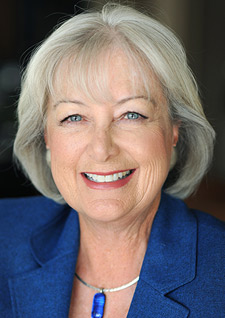 This is another district that reflects the strong organizing (some say cheating and violations of election law) in Doña Ana
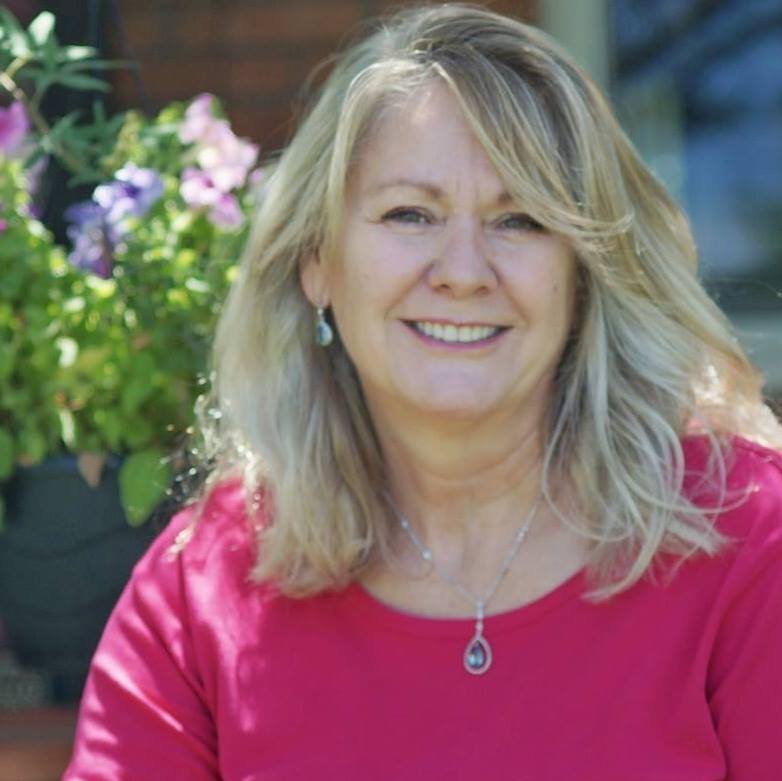 County by the hard Left of the Democratic Party. In 2010, Dr. Terry McMillan captured this seat for the GOP from Jeff Steinborn, and held it in 2012 and 2014 against furious onslaughts by Ferrary who lost twice, by 8 votes and 409 votes respectively. But Ferrary came roaring back for a third bite at the apple in 2016. It proved the charm, with the Democrat winning by 723 votes while Clinton was pounding Trump by 1,400. This year the Republican candidate has spent only $3,600 to Ferrary's $98,000. Enough said.
House District 39 (Silver City, part of Grant County pt. Doña Ana County)
.jpg) Incumbent Democrat Rodolpho Martinez v. Republican Lee S. Cotter
Incumbent Democrat Rodolpho Martinez v. Republican Lee S. Cotter.jpg)
Rodolpho "Rudy" Martinez has held this district since taking over from the late Manuel Herrera in 2007. But he lost it in 2014 to Republican John Zimmerman, who, in 2016, lost it back to Rudy by 2.2 points while Trump was getting beat by 7 points. Zimmerman opted to run for the Doña Ana County Commission, and Republicans nominated former State Senator Lee Cotter. But as of yesterday, Cotter has spent only 11 grand compared to the more than $90,000 Martinez has raised.
House District 53 (East Doña Ana County, Chaparral, one Pct in Otero County)
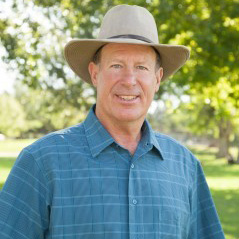 Incumbent Republican Rick Little v. Democrat Willie Madrid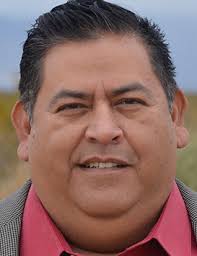
This is a rematch of the 2016 contest. Little captured the seat from Democrat Nate Cote in 2010, lost it back to him in 2012, and retook the seat in 2014. This is closely contested again, although reports have surfaced of a massive (again, possibly illegal) voter registration effort by Democrats in the fast-growing, unincorporated town of Chaparral, which stretches across the Doña Ana-Otero border. Clinton beat Trump here by 6½ points, although for Trump that was a better showing than average. Little has raised almost $72,000 and Madrid almost $79,000
OTHER DISTRICTS of NOTE
House District 28 (Albuquerque NE Heights)
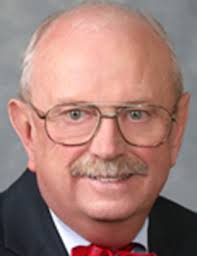 Democrats have told NMPJ they are going to take this seat from incumbent Republican Jimmie Hall. This seems implausible to us, with Hall having held the seat for 14 years and running mostly unopposed during that time. He beat activist Democrat Cornelia Lange in 2010 with 61% of the vote, but the district has changed since then, and the NE Heights have become increasingly less friendly to Republicans over the past generation.
Clinton beat Trump here by only one point, with Gary Johnson getting 12%, so we're still from Missouri on this one. But Democrats point to their attractive candidate Melanie Ann Stansbury, and point out that she has raised $176,113, while Hall has received $95,313. They also claim she has run an exceptional campaign, working tirelessly, knocking on every door, and has a host of volunteers. We'll see.
House District 29 (NW Albuquerque)
.jpg) Incumbent Republican David Adkins won re-election two years ago by only 9 votes, 6,977 to 6,968, in a district Clinton
Incumbent Republican David Adkins won re-election two years ago by only 9 votes, 6,977 to 6,968, in a district Clinton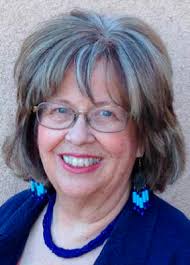 carried by 550 votes. But our reporters/readers (Democrats and Republicans) tell us Adkins is taking the race seriously this time and is working hard, something he apparently did not do last time. He has raised almost $140,000, but his Democrat challenger, Joy Garratt has raised almost $125,000. So both are running vigorous campaigns.
In House District 29, Democrats only had a 1 percentage point advantage over Republicans in 2014. That was greatly reduced in 2016. Today, the Democrats have a 15 percentage point advantage (50% to 35%).
House District 30 (Albuquerque, near NE Heights)
 This seat was held by Republican Justine Fox-Young who captured the seat in 2004, but was swept out in the Obama
 landslide of 2008. Two years later Nate Gentry recaptured the seat and held it against furious attacks and hundreds of thousands of dollars of spending, which he matched. He is retiring, and the Republicans have nominated John Jones, husband of Congressional candidate Janice Arnold-Jones (something close to a mirror image of the HD 36 situation).
Democrats have re-nominated Natalie Figueroa, who ran a competitive race against Gentry two years ago, while Hillary was pounding Trump by nearly 11 points. She has outraised Jones $126,000 to 70 grand.
House District 32 (Luna County, plus Hidaldo, and one Pct in Grant)
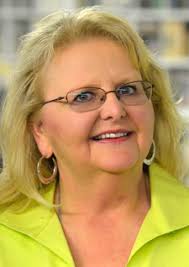 This district has been a continuously missed opportunity for the Republicans for close to 20 years. In 2016, Hillary lost the district
 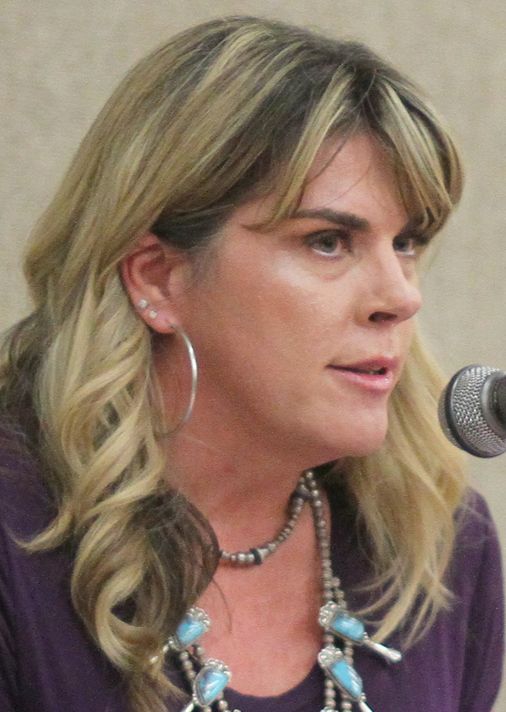 by 300 votes, with 43.9%. An excellent Republican candidate lost the district to Democrat Candie Sweetser because the losing primary candidate ran a non-stop negative campaign against her in the fall, dividing the Republican vote. This year Sweetser faces Republican Laura Boyd. But it appears the RPNM has placed little emphasis on this eminently winnable district. Boyd has spent only $26,000. Sweetser has raised $61,000. Is it yet another opportunity lost?
House District 63 (East Central NM, Santa Rosa to Clovis)
 This district is unique in the state in that it is the only house district held by a Democrat where Trump actually won. Not only did he win,
 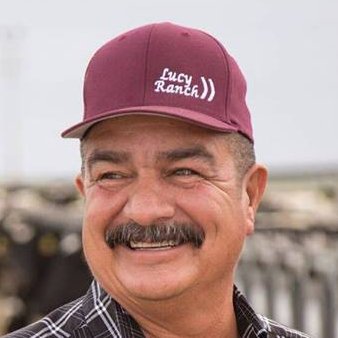 Trump won an absolute majority, beating Clinton 3,779 to 2,706, capturing 51.3% to Clinton's 36.7%. Trump carried only 25 house districts to Clinton's 45, and of those he won majorities in only 15. This is one of them.
It is truly a strange anomaly for the Democrats to hold one of the 15 strongest Republican districts in the state. Still, incumbent George Dodge of Santa Rosa works the district hard, and he has the biggest base in the Guadalupe County seat. Martin Zamora, however, is perhaps the first truly serious Republican challenger in possibly the past 20 years or so. He is widely respected and has raised over $101,000. Dodge has raised $144,000.
An upset is possible.
House District 68 (NW Albuquerque)
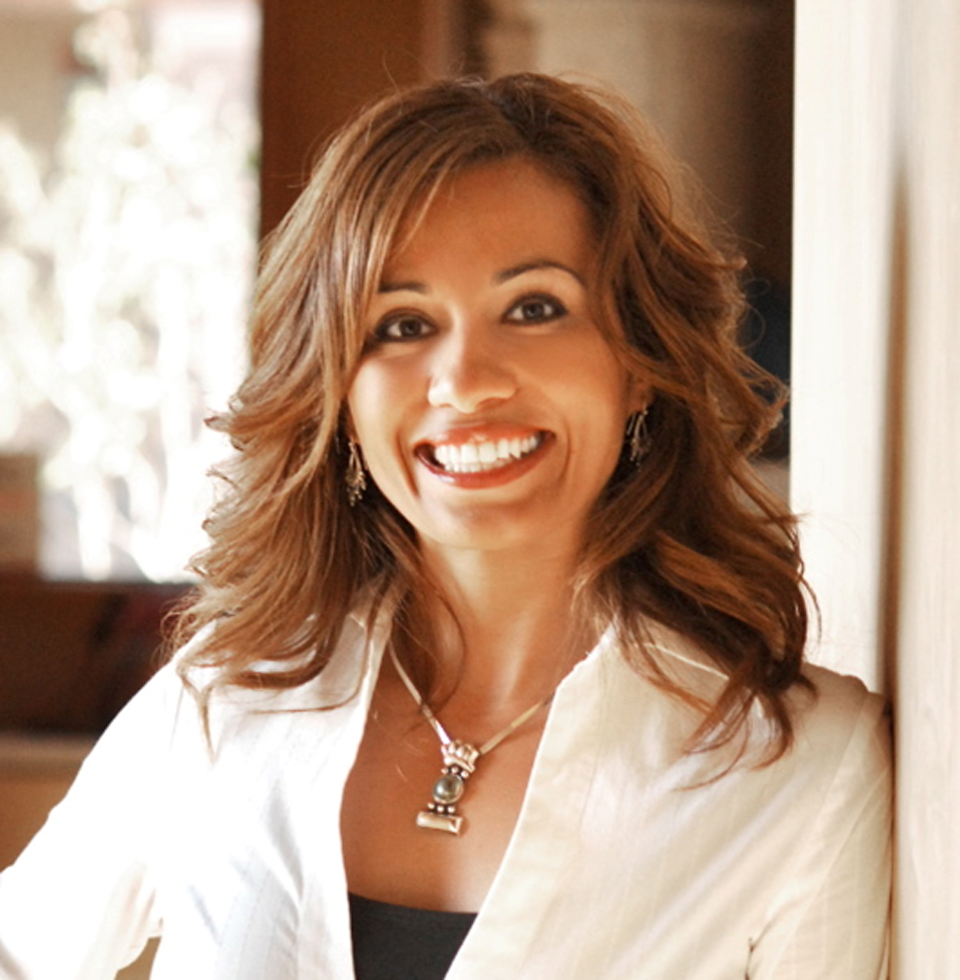 Incumbent Monica Youngblood has been treated very unfairly, both in media as well as in court, in the wake of her dubious arrest for alleged drunk driving last May. (See our comprehensive coverage of the story in our May 25 issue.) Still, emotionalism and sensationalism often triumph in politics, so we are reasonably sure she is facing a tough re-election challenge.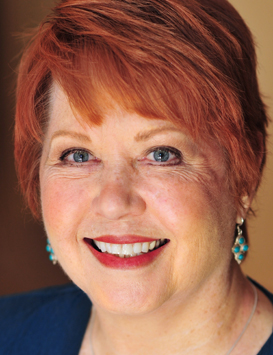
Clinton carried this district by 190 votes in 2016, beating Trump by about one-half percent. Fundraising has been highly competitive: Democrat Karen Bash has raised $86,000 to Youngblood's $101,000. Bash is said to be a Christian minister, something increasingly rare in the Democratic Party, which over the past quarter century has become steadily more hostile to people of faith (except to Muslims, whom they unquestioningly embrace). Bash's website is a study in vagueness, so we are left unsure of where she stands on much.
We would guess that she is not what might be called a confessional evangelical, but perhaps ordained in one of the "social gospel" denominations that supports all of the Left-leaning positions taken by the Democratic Party. However, we cannot say definitively due to her muzzy website and non-responses to a number of questionnaires.
Voters may buy a pig in a poke on this race, due to sensationalism. But we believe that tack, as always, would be a mistake.
DISTRICTS DEMOCRATS TALK ABOUT, BUT WE DON'T BUY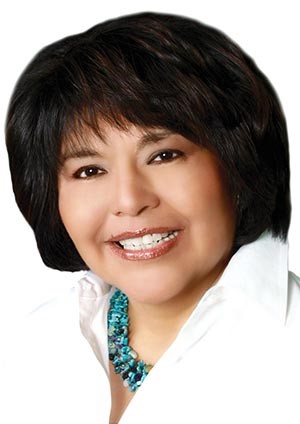
.jpg) Some Democrats have claimed that Tim Lewis in HD 60 is vulnerable. We don't give it a second thought, and haven't even covered it. Likewise, Democrats are always trying to knock off Diné Republican Sharon Clahchischilliage, claiming they can beat her every year. We have never believed them—even when she was running as the challenger. We don't believe them again this year.
Some Democrats have claimed that Tim Lewis in HD 60 is vulnerable. We don't give it a second thought, and haven't even covered it. Likewise, Democrats are always trying to knock off Diné Republican Sharon Clahchischilliage, claiming they can beat her every year. We have never believed them—even when she was running as the challenger. We don't believe them again this year.
DISTRICTS THAT HAVE MIGRATED PERMANENTLY
Just like all of Los Alamos County, House District 43, especially after the growth in the Santa Fe County portion of the district, is no longer competitive.
Email us (at nmpj@dfn.com) with your feedback, comments, questions and ideas.
Intelligent Political Discourse—for the Thoughtful New Mexican
.jpg)