New Mexico Political Journal
mobile icon
New Mexico Political Journal

.

Show Subnavigation
  • Home
  • About NMPJ
    • About
    • Editor
  • Feedback
  • Advertise on NMPJ

FacebookTwitter

If you read New Mexico Political Journal from a Facebook link, and appreciate the coverage of events, please “like” NMPJ on Facebook.

Straight-Party Ballot Issue: Toulouse Oliver's Unlawful Power Grab. The Complete Story. Toulouse Oliver's Arguments Examined. Why Voters Should be Concerned.

09/08/2018

Two years ago, we were the first to report that Maggie Toulouse Oliver was bragging to Democrat Party bosses and activists all over the state that she was going to ignore the law and institute straight-party voting. She made no bones about it, she would "just do it."

To paraphrase the famous line from The Treasure of the Sierra Madre, Maggie essentially said, "Law, what law? I don't need no stinking law!"

Our editor was able to place an op-ed in the Albuquerque Journal on April 2 of this year, predicting that it would come, and come late in the campaign.

We have therefore provided everyone who has written or opined on this issue the complete story:

• In 2001, House Bill 931 specifically repealed Section 1-9-4 of the Election Code, which read: “it permits each voter…to vote a straight party ticket in one operation…” (That was the only provision in New Mexico law that made any reference at all to straight-party voting). It was signed into law by Gov. Gary Johnson. 

Toulouse Oliver's Claim of Absolute Power is Half-Baked

SOS Toulouse Oliver has written in op-ed pieces that she can unilaterally institute the straight-party ballot because, she says:

"New Mexico law gives the secretary of state the explicit authority to decide the format of the paper ballots..."

But she is leaving out the most important part: She can only format the ballot with items, names, parties, and questions that are authorized in law. She can't make things up to put on the ballot.

So yes, the SOS "shall determine...the position of the parties, constitutional amendments, questions and the names of nominees..." but she cannot make up names of people who have not been nominated. She cannot add parties that have not qualified according to statute. She cannot place questions on the ballot that have not been submitted according to law.

Using Maggie's "logic," the purely ministerial power to "format" the ballot order gives her the authority to add whatever she wants to the ballot. If she were correct in asserting that the clerical role of formatting the names of nominees actually allows her to go beyond that and make up a "straight-party option" at the top of the ballot, then that same phantom authority would allow her to institute the Nevada provision allowing voters to choose "None of these Candidates." 

That would be very popular with a lot of voters. And it would also satisfy one of Toulouse Oliver's supposed objectives: save time.

Oliver Claims it's all about “Saving Time”—While Implying Many Voters are Unqualified to make Independent Judgments about each Contest 

Here are a number of False Claims Oliver wrote in both the Albuquerque Journal and the Santa Fe New Mexican **

Toulouse Oliver made the following claims about her "straight-party" power grab: 

• this option makes voting easier TRUE (but see our next comment below)

Anything done without thought or reflection can be described as "easier." But is that the actual purpose of voting in a representative democracy? Even if you believe that "easier" is the whole point of voting (which would be weird) it still isn't authorized in law.

• it increases ballot access  FALSE (see comment next)

This is embarrassingly false—especially for someone who claims to be an elections expert. It is a throwaway line, apparently designed to appeal to the media. Ballot access is an entirely different subject—it has to do with how certain candidates, usually independents, "decline-to-state" voters, or members of minor parties, can get their names on the ballot.

Ballot access is more difficult for them, and they may have some arguable beefs, but they are related to the number of signatures required and other hoops they have to jump through. Whether or not there is a straight-party ballot option has nothing at all to do with the issue. 

• Straight-party simply gives voters a choice  FALSE

It gives no more actual choice than is already provided. In fact, it effectively reduces choice by inviting voters not to examine each of the many choices they already have on the ballot. (Not to mention inviting them to skip all the judge retention elections and all ballot questions.) The voters already have multiple choices in that almost every single contest involves a choice, sometimes among as many as three options, including write-in and minor party candidates.

The unauthorized imposition of the straight-party merely attempts to herd voters into pack-voting or voting according to some sort of "identity-politics" scheme.

It also is designed to mislead voters—in years past, many unscrupulous and partisan poll workers have been quoted as saying "this is where you mark your party affiliation." (This is why so many ballots in years past have been found to have a straight-party mark and also have votes cast separately in each contest—voters were falsely told to "mark your affiliation" in hopes they would cast a straight-party vote and leave it at that.)

• it's for working moms  FALSE

In other words, according to Oliver, "working moms" who aren't "educated" or "sophisticated" like Toulouse Oliver, are too dumb to make individual choices on a long ballot. They need the special aid of a single mark. This is very insulting not only to working moms, but to all women everywhere.

• it's for the elderly  FALSE

Again, because of a certain age (we don't know when that is) people become too dumb to consider each race on its merits. The elderly must be given a one-mark vote. Insulting.

• it's for the veteran  FALSE

Insulting yet again, implying that if you served in the armed forces, you aren't very bright.

• it's to "find their time in the voting booth cut in half..."  TRUE (and false)

But it begs the question: Is that the purpose of voting? To cut your time in half? In fact, it's sort of false, because it will actually cut voting time not by 50%, but by about 95%. If you mark one single oval, it will take about 5 seconds. Going through every race, then voting on retention elections, ballot questions, and bond issues could take about 2 minutes. 

Oliver, as someone who drones on about how much she "cares" about voters, and how badly she wants people vote—with no barriers, no need to register (adopt automatic registration based on just being present in New Mexico), sure does promote ignorance in voting. 

Oliver Falsely Claims that her Predecessor Used the "Same Authority" as She is Claiming to Use

Oliver wrote:

"New Mexico law gives the secretary of state the explicit authority to decide the format of the paper ballots...It’s this authority that former Republican Secretary of State Dianna Duran used in 2012 when she decided to deprive New Mexico voters of this voting option...And it’s that exact same authority that I’m using..."

FALSE

Duran did no such thing. She merely announced that with regard to the ballot she would follow what the legislature had prescribed in Article 10 of the Election Code. And the straight-party ballot is simply not in that Article or any other, and is nowhere provided for in law.

If the legislature authorized straight-party voting she would have no discretion other than to provide it, just as she had no discretion to unilaterally and artificially add it to the statute by herself. Only the legislative branch can do that. Accordingly, the legislature tried to do that three times—and got it to pass the Senate twice—but it never became law.

Oliver goes on to write:

"State law neither bans nor allows straight-party voting."

TRUE, state law does not "allows" straight-party voting (and she is misleading about the "bans")

State law does not allow straight-party voting. On that point Oliver is telling the truth. But as for whether the legislature is supposed to enact a list of things that are "banned" and spell them out in a separate provision of the law is another question entirely.

For example, state law tells us when our primary election is to be held — but it has no provision "banning" the SOS from creating a new date. So does that absence of a stated "ban" allow Oliver to hold it on a different date?

The law prescribes the dates for filing declarations of candidacy for all offices. But it doesn't expressly "ban" other dates. Can the SOS come up with new filing dates? Just because such an act is not explicitly "banned"? No.

State law (1-10-8 in the Election Code) prescribes the offices to be voted on—but it has no provision "banning" the SOS from adding additional offices, in case some interest group petitions her to hold a "special contest" to elect some new official not currently listed in the law. So can Oliver just add an office? Likewise on ballot questions, can Maggie Oliver just decide to add a ballot question to the ballot that the legislature did not pass? Can she add one that no county commission passed? 

According to Oliver's extremely expansive view of her own personal powers, she can do all that, and much more.

We disagree. The Office of the Secretary of State, much like the Office of the State Treasurer, is strictly a ministerial office. It can do no more and no less than that prescribed by law. Just as county clerks cannot take over county governments and run roughshod over county commissions, the SOS cannot overrule the legislature.

Oliver wrote:

"Just last month, a federal judge ruled that without Michigan’s simple and easy-to-use straight-party voting option, voters would face long lines at the polls, which would effectively discriminate against African-American voters."
FALSE (and it's also a very racist argument by Oliver)
Very predictably, the 6th US Circuit Court of Appeals fairly quickly struck down this nonsensical ruling. It noted that a single federal judge had unilaterally ruled that one particular state, Michigan, has no authority to set up its own elections and make rules about how its own elections can be carried out, while the other 49 states continue to enjoy this same power that has been recognized since even before the US Constitution was enacted.
 
The appellate court also rejected the extremely racist argument, endorsed by Maggie Toulouse Oliver, that African-Americans somehow don't have the ability to consider each contest on a ballot and therefore must be given some sort of shortcut in order to cast a vote.
 
Toulouse Oliver Knew More than the Legislature Did—And More than the Legislative Council Service!

If no law is needed to prescribe how ballots are to be arranged, why do we even have Article 10 of New Mexico Statutes? Why do we have § 1-10-8 setting forth what the Secretary of State is to do? Maggie Oliver says there's no need for the Legislature to trouble its little head about it. She can simply do everything on her own—with no need for a written law.

That being the case, why did she not inform then-State Senator Michael Sanchez, the Majority Leader? She let him try to enact a straight-party ballot option, not just once, but three times. She let him debate it and bring it to the floor for votes. Twice.

Why was the Legislative Council Service asleep at the wheel? Why didn't Raúl Burciaga, or any of perhaps two dozen expert bill drafters and supervisors in the Legislative Council Service catch this? Why would they deliberately allow Senator Sanchez to waste the legislature's time and money on something they could very well see was unnecessary?

Answer: It never occurred to them that it was unnecessary. It never occurred to Senator Sanchez. The only person who held the keys to the kingdom on this issue was Maggie Toulouse Oliver. She was the only person in the state who secretly knew that she could have the authority to institute straight-party voting all by herself. All she needed to do was get elected.

The Secretary's Authoritarian Attitude Should Worry New Mexico Voters

The Secretary of State is New Mexico's chief elections officer. She is supposed to be even-handed and impartial. Her office could be called on at any time to play a supervisory role in a statewide recount, providing detailed instructions and guidance for how recounts, or even rechecks, and aspects of challenges should be carried out.

By bending to pressure from Democrat Party bosses and acting unilaterally to institute a law without legislation, Maggie Toulouse Oliver has shown that her thumb is on the scale, so to speak. She comes from a self-described background in political activism, with roles working for PACs and special interest groups, and she openly advertises for a number of highly partisan organizations, such as Emily's List, and many many others.

She is by far the most partisan Secretary of State in living memory, certainly the most overtly partisan and activist occupant in the past 50 years.

Such an authoritarian approach to the office and the arrogation of unwarranted power to herself can and should raise questions about the fairness with which elections might be conducted.

New Mexicans have every right to favor or oppose straight party voting. But those who favor it should urge their legislators to adopt it, not have an authoritarian administrator do so on a personal whim.


Email us (at nmpj@dfn.com) with your feedback, comments, questions and ideas.


Intelligent Political Discourse—for the Thoughtful New Mexican

back to list
National Issues

National Issues

Democrats

2016 Presidential Campaign - Democrats

Republicans

2016 Presidential Campaign - Republicans

Jeb Bush gets religion.

"They said he got religion at the end, and I'm glad that he did."  — Tom T. Hall. The Year Clayton Delaney died.

Well, it's official.  Jeb Bush has changed quite of few of his positions on illegal immigration.  The single most significant is that he no longer endorses the "path to citizenship" for those who came here illegally. 

This is, after all, the key portion of any proposal aimed at "reforming" our existing illegal immigration situation.

No sensible citizen can see any point in trying to deport between 12 and 16 million people currently living in America illegally.  And no candidate for any office that we know of supports that.  What the average American wants is for the country to "get a handle on it."  They want it stopped, our borders secured and future illegal immigration prevented.  It is a national security issue.

The Path to Legal Status

The only way to accomplish the above goals, is to identify current illegal immigrants, get them accounted for, have them documented, and placed on a path to legal status.  Neither they nor their children or spouses should live in a state of fear or anxiety.

But a path to "citizenship" is not the right course.  It is not morally or legally correct.  A merciful and compassionate nation can provide the safeguards of legal status without sending the message to the rest of the world that all you have to do is cross our border and you will eventually get to become a citizen, thus circumventing the legal framework scores of millions of Americans have followed, honored and respected.

If someone who is granted legal status eventually wants to become a citizen, that person should have to return to his or her country of origin and wait in line like 20 million people around the world are doing at any given time.  Failing that, America will forever send the signal that anyone in the world can "jump the line," and that there is no reason at all to obey our immigration and naturalization laws.

We Like Jeb Bush

We are glad Jeb Bush has learned this lesson.  He is a fine speaker, and can eloquently explain his positions on complex issue.  If he were not named "Bush" he would be an actual top tier candidate—in all that that title would entail, including likelihood of acceptance and support of and from the American people in the primaries, and in any theoretical general election.  

We also recognize that he already is a de facto top-tier candidate because of his fame and his fundraising.

If he were to be the nominee of the Republican Party we would heartily support him and endorse him.  We hope, however, that he is not, as he does not give the center-right coalition the best chance of winning.

Media Watch

Media Watch

County Government News

County Government News

Cities, Towns and Villages

Cities, Towns and Villages

Judicial Watch

Judicial Watch

Movies, Television, Pop Culture

Movies, Television, Pop Culture

  • Movies, Television, Pop Culture
    Selma   ????? We have now seen the Oscar-nominated movie Selma.   Our earlier allusion to criticism that sounded as though it was in an Oliver Stone category for historical fabrication is some...

Sports

Sports

The Major League Baseball Playoffs are not realistic, and destroy the actual meaning of the sport. 

Major League Baseball is unique in this respect—its postseason is markedly different from the way the game is played normally.  No other major league sport suffers from this flaw.

Not that much is wrong with baseball. In some respects it's the most well thought-out sport there is.  The "perfect game" many aficionados say.

But the Major League Baseball postseason experience is unique in the world of professional sports, and not in a good way. 

In fact the playoffs are flawed in such a way as to detract from the sport itself and diminish the game and what it means to be the world champion of the sport. 

Among the Big Four team sports of North America: football, hockey, basketball and baseball—and all the 122 professional major league teams competing in the NFL, NHL, NBA and MLB respectively—it is in baseball alone that the postseason turns the sport itself on its head and makes it reflect something that it is not.  This article will explain why that happens and why it is wrong-headed.


Background on the The Frequency of Play

The 30 teams in both the National Hockey League and the National Basketball Association teams play a very similar schedule.  On average, each team has a day off between games, sometimes two days off.  Though there are back-to-back games, they are relatively infrequent.  NBA teams play between 14 and 22 back-to-back games a season, and for the NHL it usually ranges between 9 and 19. The NFL has a full week between games, the exception being the new Thursday games that each team plays once, leaving them only four days' rest once a year.

But baseball players play every single day.  Ten days straight, then a day off, then seven more games, then a day off, then ten more games.  Typically a baseball team plays 27 games every 30 days.  For the NHL and NBA it would be 14 per month, and for the NFL the number would be 4.


Getting to the Playoffs:  It's a grind

In all four sports, getting to the postseason requires a total team effort—in fact an all-out total organizational effort.  Teams must be deep, have bench strength and the capability of moving players in and out of the lineup, and on and off the roster, who can take the place of key players who go down for an injury, or who have to miss games for whatever reason.  While this is true of the other three major sports as well, it is most certainly even more of a concern for baseball teams because of the sheer volume of games in which a team must field a competitive lineup.

Each league's regular season* is a marathon, not a sprint.  NFL teams play for 17 weeks, 16 games.  The NHL has an 82-game season over six months, paralleled by an NBA season of 84 games over the same timeframe. Baseball is the biggest marathon of all—a true test of resilience and endurance—162 games usually starting around the beginning of April and finishing about the end of September.

NHL teams carry 23-man rosters, of which 20 can be active for any particular game.  The NBA is similar, with 15-man rosters of which 13 can be on the bench for a given game. In the NFL, the teams have 53 players on a roster, but only 46 can suit up on game day.  In Major League Baseball, teams have a 25-man active roster, and all 25 are at the park every day.


The Postseason Playoffs:  Sport by Sport

The National Football League:

Of the 32 teams, 12 qualify for the playoffs.  The playoffs are conducted in the exact same manner as the regular season.  Each team plays once a week, the exception being that the four top teams get the first week off.  For a typical qualifier to reach the Super Bowl, the team must play three consecutive weeks.  At that point both remaining teams have two weeks off before the Super Bowl.

In short, the playoffs, with a game each week, reflects the same means of advancement as is present in regular season grind.

The National Hockey League: 

16 of the 30 teams qualify for the postseason.  The playoffs are conducted in the exact same manner as the regular season: a game, a day off, a game, a day off, a game, a day off, and so on.  Just as in the regular season, there are occasionally two days off.  But the playoffs require the same stamina, the same approach as that required to make the playoffs.


The National Basketball Association

16 of the 30 teams qualify for the postseason.  The playoffs are conducted in the exact same manner as the regular season: a game, a day off, a game, a day off, a game, a day off, and so on.  Just as in the regular season, there are occasionally two days off.  But the playoffs require the same stamina, the same approach as that required to make the playoffs.

Major League Baseball

10 of the 30 teams qualify for the postseason.  (Although four of those teams qualify only for a one-game do-or-die play-in game.)

Here is where all similarity to baseball ends. 

Unlike the other three sports whose playoffs mirror the test of the regular season, and whose conditions are the same as the regular season, Major League Baseball playoffs in no way resemble the sport itself.  In hockey, basketball and football, the teams win playoff games and reach the pinacle of the sport in exactly the same way that they qualify to try to do so. 

Not so in baseball.  They are two entirely different concepts.  Teams make the playoffs only because they have depth, five-man pitching rotations and can play day-in and day-out at a high level.  But the baseball playoffs suddenly become a kind of "all-star" game within each team's roster.  MLB playoffs are conducted in a way that more closely follows the NBA and the NHL.  Teams have enormous numbers of days off. 

Here's the key point:  No Major League Baseball team could even qualify for the postseason if they played the same way during the regular season that they do in the playoffs.  None.

In the regular season Major League Baseball teams have to use a 5-man starting rotation, with pitchers pitching every 5th day.  There are not enough days off to have even a four-man rotation, let alone a team with three pitchers.  Even the best team in baseball using only a 4-man rotation, would wear them out, and most likely end up with a record of something like 66-96, or 70-92—and that would be if they were otherwise teh best team in the sport.
 

The 2014 Baseball Postseason is Typical

As examples, last year's World Series teams the Kansas City Royals played only 15 games in 30 days, and the San Francisco Giants played only 17 games in 30 days.  The 12 to 15 days off in the non-baseball fantasy world of the MLB postseason, means that teams can turn to three pitchers and give all of them plenty of rest.  But it isn't the way baseball really works.

At one point, the Royals had 5 consecutive days off, and the Giants had 4.  This never happens in the regular season.  Even the All-Star break is only three days.  Very rarely is there anything beyond a one-day break, and even that happens only a couple of times a month. 

What this means is that neither team used the team that got them to the playoffs.  (The NFL, NBA and NHL teams ALL used the very same teams that got them to the playoffs.) 

Baseball teams use a three-man pitching rotation in the playoffs.  Sometimes, they essentially opt for two pitchers only—conceding the likelihood that some of their games are going to be lost—when their third-, or rarely fourth-best pitcher has to face one of their opponents' two-man or three-man rotation members. 

Imagine an NFL team using only one running back and three wide receivers, instead of rotating through their roster in the course of a playoff game—or using only 4 defensive backs and 4 linebackers, instead of rotating 8 or 9 DBs and 6 or 7 linebackers?  In hockey, would a team use only two or three of their forward lines?  Would an NBA team use only the starting five?  They would never make the post season if they tried to present that product to their fans during the regular season.

Those are the equivalents of what Major League Baseball sets up every fall.  No other sport drags its playoffs out in such a way as to completely change the playing field—completely change the dynamics of its game.

Why Does Baseball Do This?

MLB does this because the TV networks want to drag out the games so that they can try to have one game each day  This requires an unnecessary staggering of games, and creates the phenomenon of 15 off-days in a month.

What about travel days?

What about them?  Baseball has travel days constantly.  A team may play in Chicago one day and in Miami the next, or in New York one day and Phoenix the very next day.  Travel days as a routine part of the game are again, a phenomenon of television, and stretching out the playoffs.
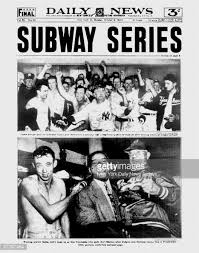
In years past, travel days were employed only when necessary. The famous "subway series" games were played on seven consecutive days.  Why?  Because there was no "travel day" required to go from Brooklyn to the Bronx.  Today, they would put in artificial travel days.

Even fairly long train trips didn't necessarily matter.  The 1948 World Series between the Cleveland Indians and the Boston Braves was played in six consecutive days, October 6 & 7 in Boston, October 8, 9 & 10 in Cleveland, and October 11 back in Boston.

This reflects actual baseball, the way the teams play day-in and day-out, and the kind of unique test that baseball presents to its athletes, its managers and management, and to its fans.

In the modern world of charter planes, teams fly from coast to coast to play games on consecutive days.  The artificial "travel day" should be eliminated so that teams can play in the playoffs in the same way that got them there in the first place.


*All these leagues also have pre-seasons and training camps, which add an additional 6-8 weeks to each player's year.


Email us with your feedback, comments, questions and ideas. 

Religious Issues

Religious Issues

  • Religious Issues
    Coming Soon

Copyright New Mexico Political Journal 2015
EMAIL US WITH YOUR FEEDBACK, COMMENTS, QUESTIONS AND IDEAS

.

Loading...