New Mexico Political Journal
mobile icon
New Mexico Political Journal

.

Show Subnavigation
  • Home
  • About NMPJ
    • About
    • Editor
  • Feedback
  • Advertise on NMPJ

FacebookTwitter

If you read New Mexico Political Journal from a Facebook link, and appreciate the coverage of events, please “like” NMPJ on Facebook.

First, Get Prisoners Voting, Next, Let them form PACs; Democrats' Goal: New Mexico Prisoners to form Political Action Committees and Direct Campaigns from Behind Bars. They are influenced by a 2007 Study titled "Felon Disenfranchisement: Why Perverts, Pedophiles, Larsonists and Arsonists Should All Be Allowed to Vote"

01/24/2019

State Representative Gail Chasey's bill, House Bill 57, stops New Mexico county clerks from removing the names of convicts from the voter rolls. But there's more. In addition to prisoners beginning to vote in mass, the Democrats' next goal is the formation of Political Action Committees on the model developed by Massachusetts Democrats, beginning in the 70s.

HERE IS THEIR MODEL: MASSACHUSETTS, from 1976 to 2000

After Massachusetts permitted prisoners to vote, by 1976, those prisoners had begun to run for office.

  • On January 23, 1976, the office of Massachusetts Director of Elections issued a ruling that stated: “Prisoners may register to vote in the community in which the prison is located if they swear on the affidavit of registration that they consider that residence to be their home." [NOTE: We can definitely expect Chasey's fellow Leftist, Secretary of State Maggie Toulouse Oliver, to issue such a declaration very soon after Chasey's bill becomes law.]
  • On February 1, 1976, around  300 men incarcerated in Concord prison registered to vote in Concord, Massachusetts. A Concord resident filed a complaint, but it is stayed, and the Massachusetts Supreme Judicial Court ultimately decides in favor of the prisoners in 1978, Dane v. Board of Registrars of Concord. [NOTE: Is there any doubt about how the highly-partisan New Mexico courts would rule?]
  • On April 21, 1976, Concord holds an election for selectman. Prisoner Carl Velleca receives 599 votes total – including 500 from people outside of the prison.
  • On September 29, 1976, prisoners at the Norfolk facility file an action to compel the Norfolk Board of Registrars to hold a voter registration session at their prison. The Norfolk County Court orders the registrar to comply, and in October registrars hold a voter registration session inside the prison. 621 men attempt to register to vote, listing the prison as their address. Ultimately the MA courts rule that they have to claim their former residence as their address, but the "right" to register is nonetheless established.       

By August 1983, Massachusetts courts, dominated by Democrats, had ruled that "the legislature must create a way for incarcerated people to register to vote through absentee ballot in the district where they lived prior to incarceration."

  • On January 30, 1988, the Boston Globe reported that prisoners incarcerated on life sentences at Norfolk prison were launching a “vigorous voter registration drive” to oppose a bill to ban prison furloughs—a program that had been established by Governor Michael Dukakis. Dukakis even insisted that the furloughs be given to prisoners serving life without parole—people with NO incentive at all to come back from a weekend furlough. [Editor's NOTE: This is probably the stupidest public policy ever enacted by any politician.]

Meanwhile, the Willie Horton Issue Surfaces

On September 21, 1988, the National Security Political Action Committee (NSPAC) runs a television ad called “Weekend Passes” endorsing vice president George H.W. Bush over Massachusetts Governor Michael Dukakis in the 1988 presidential election. The ad featured a prisoner—serving life without parole—who, despite having NO INCENTIVE TO RETURN FROM FURLOUGH, was nonetheless given a weekend furlough. This same prisoner, quite naturally, committed new crimes while out on furlough.

The point of the entire message was the abject stupidity of Michael Dukakis and his inability to logically reason through the process of figuring out that certain prisoners—those who would have no reason and no incentive to return—should not be included in the furlough program. Most Americans can see that this is a question of common sense and public policy reasoning: the point being that Dukakis did not have the judgment to serve as a school board member, city councilor, or county commissioner, let alone President of the United States.

However, because the prisoner was black, the Democrats immediately said that the issue was not one of logic or judgment, but was strictly about race. The PAC had developed an ad only because Willie Horton was African-American. The Bush campaign subsequently developed their own ad on the same issue, one that did not mention or show Willie Horton, but the Democrats persisted in saying the issue was merely race. [NOTE: The myths about this ad have been perpetuated through the last 30 years by the Democrat Party and the mainstream media—to the extent that many people have no idea what the ad was actually about.] 

MEANWHILE, SOME LEGISLATORS WANTED REFORM

On January 1, 1997, State Representative Francis L. Marini, one of only 29 Republicans in the House (there were 129 Democrats) introduced a bill to amend the state constitution, to remove voting privileges from those "convicted of murder, rape, or sex-related offenses..."

In response, on August 11, Norfolk a prison inmate organization, called the "Norfolk Lifers Group," filed paperwork to form the first-ever prisoners' Political Action Committee (PAC). It was called the "Massachusetts Prisoners Association Political Action Committee (MPAPAC). Its statement of organization read:

"For the purpose of providing educational material to prisoners of the Commonwealth and their family members dealing with the voting records of elected officials as it pertains to prisons…[to] encourage all prisoners and family members to register to vote, as well as to participate in the electoral process, [and contribute money to political candidates with] a track record of being fair and open minded on prisoner issues."

Meanwhile, some officials had had enough. On August 12, 1997, Governor Paul Celluci, a Republican, announced that he had filed a constitutional amendment to disenfranchise people in Massachusetts prisons. Cellucci said:

Criminals behind bars have no business deciding who should govern the law-abiding citizens of the Commonwealth. This proposed amendment will ensure that criminals pay their debt to society before they regain their right to participate in the political process.

Cellucci also signed Executive Order 399 barring prisoners from forming PACs, and directs the Department of Correction “to enforce an absolute prohibition on prisoners engaging in any form of solicitation of money or other things of value for political purposes.” Cellucci instructs the Department of Correction to enforce the law vigorously, “using punishments such as isolation, restriction and loss of privileges.”

Celucci continued to lead the efffort to correct the situation, working the amendment through the Massachusetts legislature, and finally to the peoplein 2000. By popular referendum, the people of Massachusetts by a margin of 60% to 34% (with 6% abstaining) ended voting by prisoners.

Does anyone believe that the current "progressive" Governor of New Mexico, whose record is replete with support of every single Leftist platform plank, would even contemplate taking such a common-sense approach? (To ask the question is to answer it.)

ENTER CHASEY, STAGE LEFT

Democrats, more specifically those in the hard-Left element which now dominates the Democrat Party, have been heavily influenced by the publication titled Felon Disenfranchisement: Why Perverts, Pedophiles, Larsonists and Arsonists Should All Be Allowed to Vote, by Eliot Thompson. 

Unlike the late Paul Celucci, today's Democrats, like Gail Chasey, make the case that individuals convicted of the most heinous crimes should be able to vote, influence legislation, lobby, form PACs, and enjoy all the privileges of the franchise—essentially paying no price in terms of governing the country or in terms of governing the lives of the very people they have victimized.

This may seem odd to a lot of voters. But apparently, it is not. After all, this is the legislature and this is the governor New Mexicans willfully put in office.

This is not Chasey's first rodeo. In the late 90's and early 2000's she led the charge to repeal the death penalty, finally succeeding in 2007. Along the way she had a number of mean-spirited confrontations with victims—mothers and fathers, husbands, wives, and siblings of New Mexicans who had been violently and brutally murdered in New Mexico—people who believe it's a moral responsibility for society to hold the most evil among us responsible for their actions. 

We can say this about Chasey: her contempt for victims is legendary, and well-remembered by many mothers and fathers who lobbied to keep the death penalty in place. They grew to suspect her motives and her veracity and, finally, strongly dislike her—and her hatred for them was, and is, palpable. (Veterans of these battles have told us that she is "the consummate liar who will twist any set of "facts" to make a point—if it helps her impose her legislation.")

Now, with overwhelming majorities in both houses, and a governor who will sign anything that comes down the pike, after an 8-year sabbatical from pushing child molester and domestic abuser "rights," Chasey has returned to her first love—prisoners—with demonic fervor. She is especially enamored with those incarcerated for life without parole.

Yesterday's initial hearing (which was not able to finish and will resume Friday) was a comic-tragic show of misinformation and misplaced enthusiasm—with a number of young people having been rounded up and urged to direct all their "compassion" for the "right to vote" for New Mexico felons. These are the people educating and leading New Mexico's youth. 


email us (at nmpj@dfn.com) with your feedback, comments, questions and ideas.


Intelligent Political Discourse—for the Thoughtful New Mexican

back to list
National Issues

National Issues

Democrats

2016 Presidential Campaign - Democrats

Republicans

2016 Presidential Campaign - Republicans

Jeb Bush gets religion.

"They said he got religion at the end, and I'm glad that he did."  — Tom T. Hall. The Year Clayton Delaney died.

Well, it's official.  Jeb Bush has changed quite of few of his positions on illegal immigration.  The single most significant is that he no longer endorses the "path to citizenship" for those who came here illegally. 

This is, after all, the key portion of any proposal aimed at "reforming" our existing illegal immigration situation.

No sensible citizen can see any point in trying to deport between 12 and 16 million people currently living in America illegally.  And no candidate for any office that we know of supports that.  What the average American wants is for the country to "get a handle on it."  They want it stopped, our borders secured and future illegal immigration prevented.  It is a national security issue.

The Path to Legal Status

The only way to accomplish the above goals, is to identify current illegal immigrants, get them accounted for, have them documented, and placed on a path to legal status.  Neither they nor their children or spouses should live in a state of fear or anxiety.

But a path to "citizenship" is not the right course.  It is not morally or legally correct.  A merciful and compassionate nation can provide the safeguards of legal status without sending the message to the rest of the world that all you have to do is cross our border and you will eventually get to become a citizen, thus circumventing the legal framework scores of millions of Americans have followed, honored and respected.

If someone who is granted legal status eventually wants to become a citizen, that person should have to return to his or her country of origin and wait in line like 20 million people around the world are doing at any given time.  Failing that, America will forever send the signal that anyone in the world can "jump the line," and that there is no reason at all to obey our immigration and naturalization laws.

We Like Jeb Bush

We are glad Jeb Bush has learned this lesson.  He is a fine speaker, and can eloquently explain his positions on complex issue.  If he were not named "Bush" he would be an actual top tier candidate—in all that that title would entail, including likelihood of acceptance and support of and from the American people in the primaries, and in any theoretical general election.  

We also recognize that he already is a de facto top-tier candidate because of his fame and his fundraising.

If he were to be the nominee of the Republican Party we would heartily support him and endorse him.  We hope, however, that he is not, as he does not give the center-right coalition the best chance of winning.

Media Watch

Media Watch

County Government News

County Government News

Cities, Towns and Villages

Cities, Towns and Villages

Judicial Watch

Judicial Watch

Movies, Television, Pop Culture

Movies, Television, Pop Culture

  • Movies, Television, Pop Culture
    Selma   ????? We have now seen the Oscar-nominated movie Selma.   Our earlier allusion to criticism that sounded as though it was in an Oliver Stone category for historical fabrication is some...

Sports

Sports

The Major League Baseball Playoffs are not realistic, and destroy the actual meaning of the sport. 

Major League Baseball is unique in this respect—its postseason is markedly different from the way the game is played normally.  No other major league sport suffers from this flaw.

Not that much is wrong with baseball. In some respects it's the most well thought-out sport there is.  The "perfect game" many aficionados say.

But the Major League Baseball postseason experience is unique in the world of professional sports, and not in a good way. 

In fact the playoffs are flawed in such a way as to detract from the sport itself and diminish the game and what it means to be the world champion of the sport. 

Among the Big Four team sports of North America: football, hockey, basketball and baseball—and all the 122 professional major league teams competing in the NFL, NHL, NBA and MLB respectively—it is in baseball alone that the postseason turns the sport itself on its head and makes it reflect something that it is not.  This article will explain why that happens and why it is wrong-headed.


Background on the The Frequency of Play

The 30 teams in both the National Hockey League and the National Basketball Association teams play a very similar schedule.  On average, each team has a day off between games, sometimes two days off.  Though there are back-to-back games, they are relatively infrequent.  NBA teams play between 14 and 22 back-to-back games a season, and for the NHL it usually ranges between 9 and 19. The NFL has a full week between games, the exception being the new Thursday games that each team plays once, leaving them only four days' rest once a year.

But baseball players play every single day.  Ten days straight, then a day off, then seven more games, then a day off, then ten more games.  Typically a baseball team plays 27 games every 30 days.  For the NHL and NBA it would be 14 per month, and for the NFL the number would be 4.


Getting to the Playoffs:  It's a grind
In all four sports, getting to the postseason requires a total team effort—in fact an all-out total organizational effort.  Teams must be deep, have bench strength and the capability of moving players in and out of the lineup, and on and off the roster, who can take the place of key players who go down for an injury, or who have to miss games for whatever reason.  While this is true of the other three major sports as well, it is most certainly even more of a concern for baseball teams because of the sheer volume of games in which a team must field a competitive lineup.

Each league's regular season* is a marathon, not a sprint.  NFL teams play for 17 weeks, 16 games.  The NHL has an 82-game season over six months, paralleled by an NBA season of 84 games over the same timeframe. Baseball is the biggest marathon of all—a true test of resilience and endurance—162 games usually starting around the beginning of April and finishing about the end of September.

NHL teams carry 23-man rosters, of which 20 can be active for any particular game.  The NBA is similar, with 15-man rosters of which 13 can be on the bench for a given game. In the NFL, the teams have 53 players on a roster, but only 46 can suit up on game day.  In Major League Baseball, teams have a 25-man active roster, and all 25 are at the park every day.


The Postseason Playoffs:  Sport by Sport

The National Football League:

Of the 32 teams, 12 qualify for the playoffs.  The playoffs are conducted in the exact same manner as the regular season.  Each team plays once a week, the exception being that the four top teams get the first week off.  For a typical qualifier to reach the Super Bowl, the team must play three consecutive weeks.  At that point both remaining teams have two weeks off before the Super Bowl.

In short, the playoffs, with a game each week, reflects the same means of advancement as is present in regular season grind.

The National Hockey League: 

16 of the 30 teams qualify for the postseason.  The playoffs are conducted in the exact same manner as the regular season: a game, a day off, a game, a day off, a game, a day off, and so on.  Just as in the regular season, there are occasionally two days off.  But the playoffs require the same stamina, the same approach as that required to make the playoffs.


The National Basketball Association

16 of the 30 teams qualify for the postseason.  The playoffs are conducted in the exact same manner as the regular season: a game, a day off, a game, a day off, a game, a day off, and so on.  Just as in the regular season, there are occasionally two days off.  But the playoffs require the same stamina, the same approach as that required to make the playoffs.

Major League Baseball

10 of the 30 teams qualify for the postseason.  (Although four of those teams qualify only for a one-game do-or-die play-in game.)

Here is where all similarity to baseball ends. 

Unlike the other three sports whose playoffs mirror the test of the regular season, and whose conditions are the same as the regular season, Major League Baseball playoffs in no way resemble the sport itself.  In hockey, basketball and football, the teams win playoff games and reach the pinacle of the sport in exactly the same way that they qualify to try to do so. 

Not so in baseball.  They are two entirely different concepts.  Teams make the playoffs only because they have depth, five-man pitching rotations and can play day-in and day-out at a high level.  But the baseball playoffs suddenly become a kind of "all-star" game within each team's roster.  MLB playoffs are conducted in a way that more closely follows the NBA and the NHL.  Teams have enormous numbers of days off. 

Here's the key point:  No Major League Baseball team could even qualify for the postseason if they played the same way during the regular season that they do in the playoffs.  None.

In the regular season Major League Baseball teams have to use a 5-man starting rotation, with pitchers pitching every 5th day.  There are not enough days off to have even a four-man rotation, let alone a team with three pitchers.  Even the best team in baseball using only a 4-man rotation, would wear them out, and most likely end up with a record of something like 66-96, or 70-92—and that would be if they were otherwise teh best team in the sport.
 

The 2014 Baseball Postseason is Typical

As examples, last year's World Series teams the Kansas City Royals played only 15 games in 30 days, and the San Francisco Giants played only 17 games in 30 days.  The 12 to 15 days off in the non-baseball fantasy world of the MLB postseason, means that teams can turn to three pitchers and give all of them plenty of rest.  But it isn't the way baseball really works.

At one point, the Royals had 5 consecutive days off, and the Giants had 4.  This never happens in the regular season.  Even the All-Star break is only three days.  Very rarely is there anything beyond a one-day break, and even that happens only a couple of times a month. 

What this means is that neither team used the team that got them to the playoffs.  (The NFL, NBA and NHL teams ALL used the very same teams that got them to the playoffs.) 

Baseball teams use a three-man pitching rotation in the playoffs.  Sometimes, they essentially opt for two pitchers only—conceding the likelihood that some of their games are going to be lost—when their third-, or rarely fourth-best pitcher has to face one of their opponents' two-man or three-man rotation members. 

Imagine an NFL team using only one running back and three wide receivers, instead of rotating through their roster in the course of a playoff game—or using only 4 defensive backs and 4 linebackers, instead of rotating 8 or 9 DBs and 6 or 7 linebackers?  In hockey, would a team use only two or three of their forward lines?  Would an NBA team use only the starting five?  They would never make the post season if they tried to present that product to their fans during the regular season.

Those are the equivalents of what Major League Baseball sets up every fall.  No other sport drags its playoffs out in such a way as to completely change the playing field—completely change the dynamics of its game.

Why Does Baseball Do This?

MLB does this because the TV networks want to drag out the games so that they can try to have one game each day  This requires an unnecessary staggering of games, and creates the phenomenon of 15 off-days in a month.

What about travel days?

What about them?  Baseball has travel days constantly.  A team may play in Chicago one day and in Miami the next, or in New York one day and Phoenix the very next day.  Travel days as a routine part of the game are again, a phenomenon of television, and stretching out the playoffs.
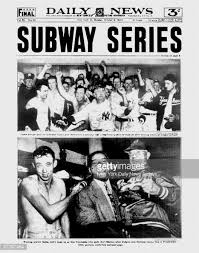
In years past, travel days were employed only when necessary. The famous "subway series" games were played on seven consecutive days.  Why?  Because there was no "travel day" required to go from Brooklyn to the Bronx.  Today, they would put in artificial travel days.

Even fairly long train trips didn't necessarily matter.  The 1948 World Series between the Cleveland Indians and the Boston Braves was played in six consecutive days, October 6 & 7 in Boston, October 8, 9 & 10 in Cleveland, and October 11 back in Boston.

This reflects actual baseball, the way the teams play day-in and day-out, and the kind of unique test that baseball presents to its athletes, its managers and management, and to its fans.

In the modern world of charter planes, teams fly from coast to coast to play games on consecutive days.  The artificial "travel day" should be eliminated so that teams can play in the playoffs in the same way that got them there in the first place.


*All these leagues also have pre-seasons and training camps, which add an additional 6-8 weeks to each player's year.


Email us with your feedback, comments, questions and ideas. 

Religious Issues

Religious Issues

  • Religious Issues
    Coming Soon

Copyright New Mexico Political Journal 2015
EMAIL US WITH YOUR FEEDBACK, COMMENTS, QUESTIONS AND IDEAS

.

Loading...