New Mexico Political Journal
mobile icon
New Mexico Political Journal

.

Show Subnavigation
  • Home
  • About NMPJ
    • About
    • Editor
  • Feedback
  • Advertise on NMPJ

FacebookTwitter

If you read New Mexico Political Journal from a Facebook link, and appreciate the coverage of events, please “like” NMPJ on Facebook.

New Mexico State House Says "GOOD-BYE COLUMBUS." More Ignorance on Display. New Mexico House Dumps Columbus—Goes with "Indigenous Peoples" Day. But, Do they have to Return all the Stuff? 26 Hispanic Representatives Condemn their own Culture.

02/11/2019

House Bill 100, introduced by Representative Derrick J. Lente of  Sandia Pueblo and Representative Andrea Romero of Santa Fe, renames Columbus Day, designating it as "Indigenous Peoples' Day."

In presenting the bill on the floor of the House, Representative Romero, who became somewhat famous this past year for essentially stealing* from the expense accounts of the Regional Coalition of LANL Communities* (RCLC), made the following remarks:

"I am happily supporting this legislation as New Mexicans I believe we cherish our native and indigenous communities. Indigenous Peoples' Day reaffirms our support for our native communities that have truly made us the Land of Enchantment. This legislation is about honoring our rich and diverse cultural history and recognizing that native communities are core to our state's identity. Recognizing Columbus Day, um, someone [sic] who neither discovered America or treated native Americans with respect, has been an affront to Native communities who founded our country. Indigenous People's Day is a way to honor, recognize and celebrate the contribution native communities have made to our state. With that, we stand for questions."

First things first: Native communities did not "found" our country. Our "country" is the United States, and the founding of the United States is covered in all the history books—at least until all those courses were replaced with "Women's Studies," and a "Survey of LGBT Communities." 

Second, Native Americans all over what is now the United States (and the Americas) displaced peoples who were there before them. The Athabascan-speaking peoples (the Navajo and Apache) arrived in the Southwest at about the same time Columbus made his first voyage, though some scholars believe it may have been 40 to 50 years earlier.

In any case, they weren't "native" to the land until then. And they themselves supplanted other peoples in the Southwest when they moved south from what is now Canada. The Plains Indians did the same, populating a region stretching from the present-day Dakotas to Kansas.

Andrea Romero and the Columbian Exchange: Her Famous Burritos

The speech shown above is somewhat ironic, for Representative Romero at least, in that the expense account she abused for the RCLC, recorded her as guzzling burritos almost daily—as a "travel, per diem, and mileage expense," even though she didn't actually travel anywhere. She just ate burritos for lunch every day and charged them to a somewhat witless RCLC board. 

So why is it ironic, at least a little? Well, the "burrito" is a cross-cultural phenomenon, appearing in Mexico in the 19th Century.

It's made with a flour tortilla—something that was not possible until the occurrence of what is called the Columbian Exchange—a name given to the widespread transfer of plants, animals, technology, culture, populations, and ideas between Europe and the Americas—brought about by Columbus's explorations.

The Spanish brought wheat to the Americas. Unlike corn, it was one of the world's major grain crops which the local populations did not have. Thus it became possible to make a flour tortilla, an item for which Romero apparently charged RCLC hundreds of dollars per year.

The COLUMBIAN EXCHANGE to be REVERSED

If the proponents of the Indigenous Peoples' Day bill were sincere, they would have included a provision that rolls back all the changes brought about by the work that originated with Columbus. 

Simply put, they could have committed themselves to abandoning everything in New Mexico that isn't "Native American." Those items would include such things as:

The wheel. 

We would have more respect for Romero if she'd said something like:

"We actually think we will be better off, environmentally, dragging stuff on a blanket tied between two long poles, pulled by a dog, than to have trucks transporting everything and polluting the air and tearing up highways."

We would also have more respect for her if she had noted that we need to slowly, over time, get rid of such things as horses, cows, sheep (although a Navajo representative may have objected to this), hogs, chickens, goats, rabbits, and cats.

And don't forget coffee, sugarcane, bananas, apples, apricots, cucumbers, carrots, pomegranates, wheat, barley, rye, oats, sorghum, pistachios, spinach, watermelons (there could be an objection from Sandia Pueblo) olives, onions, peaches and scores of other plants and crops.

At least she enjoyed the "calabacita" burritos, which of course is something the Native populations gave to Europeans. (For the record, rye was also part of the European contribution to the Americas, making possible yet another Romero purchase.)

An Ugly Display—Designed to Divide, not to "Heal" or Do Anything Else

The whole scene in the state house was, well, rather silly. Don't get us wrong—we don't blame Romero or Lente. True, they have no idea what they are talking about, but that's not necessarily their fault, nor are they alone. Most Leftists today merely mimic and parrot popular memes they get from Leftist "community organizers" and such. 

As part of all the angry, resentful commentary about Columbus, this bill reinforces something that, oddly, English propagandizers—among others— created: The Black Legend.

The Black Legend is the term for the propaganda that asserted (and asserts today) that Spain, and the Spanish peoples who settled and inhabited much of the Americas were uniquely evil, and were uniquely and cruelly associated with slavery, exploitation, and genocide.

So it is also ironic that some 26 Hispanic members of the House voted to endorse the Black Legend—and therefore somewhat stupidly condemning their own forebears and betraying their own heritage. (Republicans David Gallegos and Rod Montoya were the only two representatives of Spanish descent to have the gumption to vote "No.") But we digress.

Uncivilized Conduct has Been the Norm: No Race or Ethnic Group has been Free from it

The reality is that the "indigenous peoples" are, like every other group in the history of anthropology, guilty of the very same "sins" that today's activists cite in attacking the Spanish (or the British, or the French, or Belgians, or anyone else).

In fact, Native American culture under the same microscope of anthropological, archeological, and historical examination, doesn't hold up terribly well.

Native American tribal groups practiced slavery long before the European introduction of African slavery into North America. Additionally, captured warriors, in particular, were often mutilated and tortured. Some Indians did the very thing Oñate is accused of: cutting a foot off their captives to keep them in bondage. Native Americans also sold their slaves to Europeans.

Human sacrifice was widespread in the Americas. In what is now the Eastern U.S., the Iroquois cut the fingers off their captives and forced them to set each other on fire. They dragged bodies of captives around their camps, carved them up, and ate parts of the body.

Cannibalism was fairly common in the New World. Aztecs, who are now revered—and claimed by many Leftist Mexican-American political "leaders" as their "true" ancestors (while they reject their Spanish heritage)—viewed their captives as "marching meat." The word "Mohawk" comes from the Algonquin family of languages as a term for "flesh eaters."

Native Americans were obsessed with the heads of their enemies. Scalping was very common. Deep in the jungles of the Americas, head-hunting and head-shrinking was a big scene. The Mayans famously played a kind of ball game, using a severed head as "the ball."

No More than a Maximum of One or Two People on the House Floor 

Sadly these days, there is not a lot of informed discussion taking place on very many issues in the state house or state senate. Regarding the debate on House Bill 100, if there was anyone at all on the House Floor who actually knew much at all about the subject being discussed it was certainly no more than one or two. 

So, now we are left to celebrate “Indigenous People’s Day”?
 
We are dumping Columbus Day because he led an evil onslaught from Spain? A violent and repressive crowd of Iberians who introduced slavery? To replace it with a day honoring other violent and repressive peoples who introduced slavery even earlier than the Spanish?
 
That notion would be laugh-out-loud funny if it weren't so serious.
 
It isn't funny because it is nothing more than the continued influence of the Left, trying to tear at American society, trying to divide a long-existing unity among the American people, and a sense of oneness and common purpose that had grown incrementally through the many decades of the American Experiment. At least until recent times.
 
The entire Columbus Day v. Indigenous Peoples' Day show is a phony issue—an invented controversy.
 
The history of the entire world, on every continent, is replete with the stories of one group of violent, aggressive peoples invading territory occupied by other violent, aggressive peoples who had previously displaced other human tribes who were themselves violent, aggressive displacers of their fellow human beings.
 
That was long-since true of the Americas eons before Columbus ever thought of coming this direction.
 
Violence, displacement, conquest, and yes, racism and bigotry have been part of EVERY group of human beings that has walked the earth. All these "sins," these original conditions mankind, are universal human frailties.
 
They are historic, anthropological facts—confirming the continuous flaws in the makeup of human beings. They are hardly unique to the Spanish, nor to the Italians (for the shrinking group of people who continue to believe Columbus was Italian).

Overlooking the Key Difference—Lost in All the Nonsense and Grandstanding  

Yes, there was greed, violence, subjugation, and exploitation in the post-Columbian New World. But there are many great things America has today which are gifts from our forebears—an actual inheritance from people like Columbus and many other Europeans.

In addition to their own peculiar flaws, the Europeans also brought literacy, and eventually brought The Enlightenment and classical liberalism.

All those things carried with them the powerful forces of political thought, economic theory, the scientific method, innovation, the power of ideas, and the technological transformation that has come with those additions to the human experience.

Those are all gifts, legacies, and inheritances we would not have, but for the Encounter of 1492. 

Do those who are so vehemently "anti-Columbus," or "anti-Spanish" really want to pretend they wish they lived in the same world that existed before those cultures encountered our native lands here in New Mexico, or in the United States?

Are they really in favor of a New Mexico without the wheel? Would they really be happier living in so-called "native" cultures, environments, and social mores left completely undisturbed for half a millennium?

We doubt it. But then again, we don't really believe they think much about any of these questions.


* We have no doubt that Romero's "excuse" would be: "Well, they approved it." Which of course is a strong indictment of the RCLC.


Email us (at nmpj@dfn.com) with your feedback, comments, questions and ideas.


Intelligent Political Discourse—for the Thoughtful New Mexican


back to list
National Issues

National Issues

Democrats

2016 Presidential Campaign - Democrats

Republicans

2016 Presidential Campaign - Republicans

Jeb Bush gets religion.

"They said he got religion at the end, and I'm glad that he did."  — Tom T. Hall. The Year Clayton Delaney died.

Well, it's official.  Jeb Bush has changed quite of few of his positions on illegal immigration.  The single most significant is that he no longer endorses the "path to citizenship" for those who came here illegally. 

This is, after all, the key portion of any proposal aimed at "reforming" our existing illegal immigration situation.

No sensible citizen can see any point in trying to deport between 12 and 16 million people currently living in America illegally.  And no candidate for any office that we know of supports that.  What the average American wants is for the country to "get a handle on it."  They want it stopped, our borders secured and future illegal immigration prevented.  It is a national security issue.

The Path to Legal Status

The only way to accomplish the above goals, is to identify current illegal immigrants, get them accounted for, have them documented, and placed on a path to legal status.  Neither they nor their children or spouses should live in a state of fear or anxiety.

But a path to "citizenship" is not the right course.  It is not morally or legally correct.  A merciful and compassionate nation can provide the safeguards of legal status without sending the message to the rest of the world that all you have to do is cross our border and you will eventually get to become a citizen, thus circumventing the legal framework scores of millions of Americans have followed, honored and respected.

If someone who is granted legal status eventually wants to become a citizen, that person should have to return to his or her country of origin and wait in line like 20 million people around the world are doing at any given time.  Failing that, America will forever send the signal that anyone in the world can "jump the line," and that there is no reason at all to obey our immigration and naturalization laws.

We Like Jeb Bush

We are glad Jeb Bush has learned this lesson.  He is a fine speaker, and can eloquently explain his positions on complex issue.  If he were not named "Bush" he would be an actual top tier candidate—in all that that title would entail, including likelihood of acceptance and support of and from the American people in the primaries, and in any theoretical general election.  

We also recognize that he already is a de facto top-tier candidate because of his fame and his fundraising.

If he were to be the nominee of the Republican Party we would heartily support him and endorse him.  We hope, however, that he is not, as he does not give the center-right coalition the best chance of winning.

Media Watch

Media Watch

County Government News

County Government News

Cities, Towns and Villages

Cities, Towns and Villages

Judicial Watch

Judicial Watch

Movies, Television, Pop Culture

Movies, Television, Pop Culture

  • Movies, Television, Pop Culture
    Selma   ????? We have now seen the Oscar-nominated movie Selma.   Our earlier allusion to criticism that sounded as though it was in an Oliver Stone category for historical fabrication is some...

Sports

Sports

The Major League Baseball Playoffs are not realistic, and destroy the actual meaning of the sport. 

Major League Baseball is unique in this respect—its postseason is markedly different from the way the game is played normally.  No other major league sport suffers from this flaw.

Not that much is wrong with baseball. In some respects it's the most well thought-out sport there is.  The "perfect game" many aficionados say.

But the Major League Baseball postseason experience is unique in the world of professional sports, and not in a good way. 

In fact the playoffs are flawed in such a way as to detract from the sport itself and diminish the game and what it means to be the world champion of the sport. 

Among the Big Four team sports of North America: football, hockey, basketball and baseball—and all the 122 professional major league teams competing in the NFL, NHL, NBA and MLB respectively—it is in baseball alone that the postseason turns the sport itself on its head and makes it reflect something that it is not.  This article will explain why that happens and why it is wrong-headed.


Background on the The Frequency of Play

The 30 teams in both the National Hockey League and the National Basketball Association teams play a very similar schedule.  On average, each team has a day off between games, sometimes two days off.  Though there are back-to-back games, they are relatively infrequent.  NBA teams play between 14 and 22 back-to-back games a season, and for the NHL it usually ranges between 9 and 19. The NFL has a full week between games, the exception being the new Thursday games that each team plays once, leaving them only four days' rest once a year.

But baseball players play every single day.  Ten days straight, then a day off, then seven more games, then a day off, then ten more games.  Typically a baseball team plays 27 games every 30 days.  For the NHL and NBA it would be 14 per month, and for the NFL the number would be 4.


Getting to the Playoffs:  It's a grind

In all four sports, getting to the postseason requires a total team effort—in fact an all-out total organizational effort.  Teams must be deep, have bench strength and the capability of moving players in and out of the lineup, and on and off the roster, who can take the place of key players who go down for an injury, or who have to miss games for whatever reason.  While this is true of the other three major sports as well, it is most certainly even more of a concern for baseball teams because of the sheer volume of games in which a team must field a competitive lineup.

Each league's regular season* is a marathon, not a sprint.  NFL teams play for 17 weeks, 16 games.  The NHL has an 82-game season over six months, paralleled by an NBA season of 84 games over the same timeframe. Baseball is the biggest marathon of all—a true test of resilience and endurance—162 games usually starting around the beginning of April and finishing about the end of September.

NHL teams carry 23-man rosters, of which 20 can be active for any particular game.  The NBA is similar, with 15-man rosters of which 13 can be on the bench for a given game. In the NFL, the teams have 53 players on a roster, but only 46 can suit up on game day.  In Major League Baseball, teams have a 25-man active roster, and all 25 are at the park every day.


The Postseason Playoffs:  Sport by Sport

The National Football League:

Of the 32 teams, 12 qualify for the playoffs.  The playoffs are conducted in the exact same manner as the regular season.  Each team plays once a week, the exception being that the four top teams get the first week off.  For a typical qualifier to reach the Super Bowl, the team must play three consecutive weeks.  At that point both remaining teams have two weeks off before the Super Bowl.

In short, the playoffs, with a game each week, reflects the same means of advancement as is present in regular season grind.

The National Hockey League: 

16 of the 30 teams qualify for the postseason.  The playoffs are conducted in the exact same manner as the regular season: a game, a day off, a game, a day off, a game, a day off, and so on.  Just as in the regular season, there are occasionally two days off.  But the playoffs require the same stamina, the same approach as that required to make the playoffs.


The National Basketball Association

16 of the 30 teams qualify for the postseason.  The playoffs are conducted in the exact same manner as the regular season: a game, a day off, a game, a day off, a game, a day off, and so on.  Just as in the regular season, there are occasionally two days off.  But the playoffs require the same stamina, the same approach as that required to make the playoffs.

Major League Baseball

10 of the 30 teams qualify for the postseason.  (Although four of those teams qualify only for a one-game do-or-die play-in game.)

Here is where all similarity to baseball ends. 

Unlike the other three sports whose playoffs mirror the test of the regular season, and whose conditions are the same as the regular season, Major League Baseball playoffs in no way resemble the sport itself.  In hockey, basketball and football, the teams win playoff games and reach the pinacle of the sport in exactly the same way that they qualify to try to do so. 

Not so in baseball.  They are two entirely different concepts.  Teams make the playoffs only because they have depth, five-man pitching rotations and can play day-in and day-out at a high level.  But the baseball playoffs suddenly become a kind of "all-star" game within each team's roster.  MLB playoffs are conducted in a way that more closely follows the NBA and the NHL.  Teams have enormous numbers of days off. 

Here's the key point:  No Major League Baseball team could even qualify for the postseason if they played the same way during the regular season that they do in the playoffs.  None.

In the regular season Major League Baseball teams have to use a 5-man starting rotation, with pitchers pitching every 5th day.  There are not enough days off to have even a four-man rotation, let alone a team with three pitchers.  Even the best team in baseball using only a 4-man rotation, would wear them out, and most likely end up with a record of something like 66-96, or 70-92—and that would be if they were otherwise teh best team in the sport.
 

The 2014 Baseball Postseason is Typical

As examples, last year's World Series teams the Kansas City Royals played only 15 games in 30 days, and the San Francisco Giants played only 17 games in 30 days.  The 12 to 15 days off in the non-baseball fantasy world of the MLB postseason, means that teams can turn to three pitchers and give all of them plenty of rest.  But it isn't the way baseball really works.

At one point, the Royals had 5 consecutive days off, and the Giants had 4.  This never happens in the regular season.  Even the All-Star break is only three days.  Very rarely is there anything beyond a one-day break, and even that happens only a couple of times a month. 

What this means is that neither team used the team that got them to the playoffs.  (The NFL, NBA and NHL teams ALL used the very same teams that got them to the playoffs.) 

Baseball teams use a three-man pitching rotation in the playoffs.  Sometimes, they essentially opt for two pitchers only—conceding the likelihood that some of their games are going to be lost—when their third-, or rarely fourth-best pitcher has to face one of their opponents' two-man or three-man rotation members. 

Imagine an NFL team using only one running back and three wide receivers, instead of rotating through their roster in the course of a playoff game—or using only 4 defensive backs and 4 linebackers, instead of rotating 8 or 9 DBs and 6 or 7 linebackers?  In hockey, would a team use only two or three of their forward lines?  Would an NBA team use only the starting five?  They would never make the post season if they tried to present that product to their fans during the regular season.

Those are the equivalents of what Major League Baseball sets up every fall.  No other sport drags its playoffs out in such a way as to completely change the playing field—completely change the dynamics of its game.

Why Does Baseball Do This?

MLB does this because the TV networks want to drag out the games so that they can try to have one game each day  This requires an unnecessary staggering of games, and creates the phenomenon of 15 off-days in a month.

What about travel days?

What about them?  Baseball has travel days constantly.  A team may play in Chicago one day and in Miami the next, or in New York one day and Phoenix the very next day.  Travel days as a routine part of the game are again, a phenomenon of television, and stretching out the playoffs.
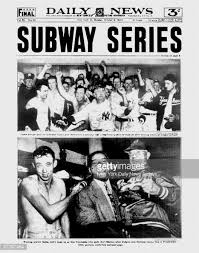
In years past, travel days were employed only when necessary. The famous "subway series" games were played on seven consecutive days.  Why?  Because there was no "travel day" required to go from Brooklyn to the Bronx.  Today, they would put in artificial travel days.

Even fairly long train trips didn't necessarily matter.  The 1948 World Series between the Cleveland Indians and the Boston Braves was played in six consecutive days, October 6 & 7 in Boston, October 8, 9 & 10 in Cleveland, and October 11 back in Boston.

This reflects actual baseball, the way the teams play day-in and day-out, and the kind of unique test that baseball presents to its athletes, its managers and management, and to its fans.

In the modern world of charter planes, teams fly from coast to coast to play games on consecutive days.  The artificial "travel day" should be eliminated so that teams can play in the playoffs in the same way that got them there in the first place.


*All these leagues also have pre-seasons and training camps, which add an additional 6-8 weeks to each player's year.


Email us with your feedback, comments, questions and ideas. 

Religious Issues

Religious Issues

  • Religious Issues
    Coming Soon

Copyright New Mexico Political Journal 2015
EMAIL US WITH YOUR FEEDBACK, COMMENTS, QUESTIONS AND IDEAS

.

Loading...