New Mexico Political Journal
mobile icon
New Mexico Political Journal

.

Show Subnavigation
  • Home
  • About NMPJ
    • About
    • Editor
  • Feedback
  • Advertise on NMPJ

FacebookTwitter

If you read New Mexico Political Journal from a Facebook link, and appreciate the coverage of events, please “like” NMPJ on Facebook.

4:40 PM. UPDATE on Keller: More Explanation. Reader Feedback.

07/29/2015

4:40 PM. UPDATE on Keller: More Explanation. Reader Feedback.

At first we didn't understand the following comment by Mr. Polequaptewa:

"You cannot copyright the use of elected officials to gain contracts as a legitimate business model."  

Finally we realized what he was saying, and doing.  He was making fun of Blue Stone's lawsuit against him in which they were pretending that the reason they had stolen his personal computer (his own property, not theirs) was that he was some how going to make off with "trade secrets."

But he has systematically shown that Blue Stone has no trade secrets to "copyright." So the point he is making is all they have going for them is politicians and tribal officials who trade on a pay-to-play styled approach to business.  

And he's making the point there's no creativity in that—there's no innovation, nothing substantive—let alone anything to "copyright" or that constitutes a "trade secret." On the contrary, Bill Richardson made pay-to-play very famous. We all know about it now.

And their training materials are nothing to write home about. (See Reader Feedback below.)

That's why Polequaptewa goes on to say:

"I was not sued by Blue Stone to protect trade secrets, I was sued by Blue Stone to protect their associates, such as then Senator Tim Keller, and their questionable tactics."

Readers Weigh In, Not Impressed.

Here's some of our feedback:

From a Native American:

"They're doing nothing more than just ripping off tribes, anyone can read this stuff and see that, and Keller was helping them do that. No wonder he wants to clam up and claim it's for something else."  [NMPJ Note: Reader seems to clearly be referring to Keller's claims of "retaliation."]

From a Native American:

"Every Native should be angry about all of this, it makes our people look like suckers. I don't blame Keller as much as our tribal leaders."

A reader from Albuquerque:

"I come from sales. These are hard-core sales pitches—the boilerroom stuff people use when you don't have a good product. Their technique reminds me of Time-Share sales people, close, close, close, push for a decision. 30 minutes. No wonder Keller is embarrassed by all of this."


1:30 PM: UPDATE:

Let's spell it out for everybody. Here's a quote from the Albuquerque Journal:

"Keller is not party in the lawsuit and denied last week ever soliciting work for the firm, where he worked as a financial analyst from the summer of 2009 until last fall."

But here is what Keller himself wrote about his own work in the PowerPoint Keller wrote himself:

Qualifying Prospects

  • Identify the "universe" of tribes (prospects)
  • Know the process of "value oriented" consultative selling [NMPJ emphasis]
  • Our sales universe is the total number of tribes plus tribal entities
  • Our qualifications are:  Are they large enough—have enough funds to pay for our services?
  • We only proactively target "qualified" prospects [Keller put in the quotation marks, not NMPJ] 
  • Marketing for advisors (us) is usually based on relationships building: meals, golf, etc.
  • Outreach and Reaction: Targeting decision makers and Influencers

•Alvin and Tim explained to council how their needs (strat planning, RV store and land acquisition) were areas Blue Stone had expertise in
•Council agreed that Blue Stone should come back with a proposal on each

•Internal pricing and time requirements  •Tim and Alvin crafted proposals  •Tim can be project lead 

•Blue Stone hires Tim Keller and puts him on the Isleta team

Iterate proposal with decision makers/CLOSE

•Tim staffed to lead project

Keller then listed every single tribe and Pueblo in New Mexico except Santa Ana and provided a list of lobbyists.

Lawyers/Lobbyists: 

Peter Chestnut, Stuart Paisano, Cate Stetson, Maxine Velasquez, Charlie Dorame, Tom Horan, Teresa Ledger, JD Bulliton [sic], Drew Setter, Mark Duran.


What Does All this Mean?

Senator Keller developed a PowerPoint presentation showing how to solicit business and sell "services" to tribes. Then he was made "the lead."

Why? Blue Stone realizes they have a better chance of selling tribes if they use a state senator to enlist the help of lobbyists—who always need his vote on other issues? 

The entire PowerPoint, which you can read at the link below, emphasized "relationships" over and over again.

https://www.scribd.com/doc/272957273/Blue-Stone-Tim-Keller-Business-Development-Plans


Bottom line: Keller grossly misrepresented himself to the Albuquerque Journal and numerous other media when he indicated the following:

"Keller is not party in the lawsuit and denied last week ever soliciting work for the firm."

Media reaction:  The big difference in the way the media react to Keller and the way they went after Griego is this: They didn't like Griego. They thought he abused campaign funds and they were laying for him.

The media love Keller.  He's a "progressive." He touts his Harvard MBA all the time. He's smooth. He's charming. He has a good line. They are mesmerized by him and reluctant to criticize anyone with whom they agree politically.


NMPJ Published at 10:45 AM Wednesday, July 29

Blue Stone Whistleblower Releases Devastating PowerPoint about Keller. Keller will have a Difficult time Explaining PowerPoint—It contradicts His Repeated Stories to the Media.?

A PowerPoint presentation detailing then-Senator Tim Keller's deep involvement with New Mexico tribes has been released by Native American activist Nikishna Polequaptewa, a Hopi tribal member from Kykotsmovi Village, Arizona, and a former employee with Keller's company, Blue Stone Strategies.

The PowerPoint shows specific acts Keller carried out himself, or led, as a sitting state senator—acting on behalf of clients, including some for which he requested and secured capital outlay appropriations from New Mexico taxpayers.

These kinds of breaking revelations underscore Keller's motive in misleading journalists, or—some would say—directly lying to reporters about his involvement with Indian clients over the past several years.

The revelations show actions on Keller's part that would appear to be indefensible, which would of course tempt Keller to try to keep anyone from knowing about them.


PowerPoint  https://www.scribd.com/doc/272957273/Blue-Stone-Tim-Keller-Business-Development-Plans

Mr.Nikishna Polequaptewa has just published a PowerPoint presentation showing the extent to which Blue Stone Strategies does the hard sell to Indian tribes around the country.  He writes:

I read the Albuquerque Journal article that has been syndicated to papers all across the country.  I would like to the opportunity to rectify the storyline.    

I was not sued by Blue Stone to protect trade secrets, I was sued by Blue Stone to protect their associates, such as then Senator Tim Keller, and their questionable tactics. 

You cannot copyright the use of elected officials to gain contracts as a legitimate business model. 

I was not sure who to go to...who audits the state auditor...? 

Please see Slides 8-11 and the last slide of the PPT sent to my personal email account back in April 2014 by Tim Keller that outlines his step by step involvement in business development with Tribes in New Mexico.


Fake Claims Keller has pitched to the Media

Mr. Polequaptewa goes on to say that Blue Stone's lawsuit against him and what he terms the "faux FBI investigation" was nothing more than a legal ruse that Blue Stone's legal team came up with.

Their goal is to "cover up the fact that the company relies on the influence of elected officials to gain contracts from their constituents."

And one of those was then-Senator Tim Keller.

Polequaptewa states that he and his attorney have already met with the FBI and that he told them

"exactly what I told the New Mexico Political Journal, which is why no charges have ever been filed and they said they would be looking into Blue Stone Strategy Group."


Polequaptewa Wants to Clear His Name

Polequaptewa states:

"I am telling the truth, I have proof (see attached document) and money doesn't lie. 

"Next month will initiate the Discovery phase of the lawsuit, which will entitle my legal team to subpoena financial records, emails and other documents from Blue Stone to show who was paid, when and how much. 

"When I quit (a month before Christmas, mind you, with 3 young children depending on me), Blue Stone officials exacerbated their retaliation against me for voicing concerns about how the company was operating. 

"When the Albuquerque Journal article hit the California news outlets, Blue Stone Strategy Group attempted to hack into my personal email accounts yet again and immediately started making changes to the website.

"The Tim Keller issue is just the tip of the iceberg, this case extends into the highest levels of Indian Gaming, Elected Officials and Indian News Publications in what appears to be a racketeering scheme.  I wanted no part of it, but it appears I have no other option other than to say what I know to clear my name."


Keller's Preposterous Stories to the Press

Keller has made a number of implausible claims, two of the most recent being:
  • "not knowing" about the lawsuit at all until last week
  • telling news outlets that the lawsuit was initiated in retaliation for something he announced this month

No one, probably not even the Santa Fe Reporter, now believes either.

To believe Keller, you have to believe that Blue Stone and Mr. Polequaptewa knew last November (eight months in advance—when Keller hadn't' even taken office as state auditor) that Keller was going to issue some kind of news release in July, 2015 about the New Mexico Tax and Revenue.

Hard to follow?  Of course. That's downright stupid. But that is what Keller has told the news media (a deeply embarrassed Associated Press had to take down a preposterous article in which they'd taken Keller's word that Polequaptewa and Blue Stone were both clairvoyant.

That left only left-wing bloggers Pat Davis and Joe Monahan (water boys shown at left) brazen enough to continue pushing the claim.

They've gotten themselves totally soaked trying to see who can carry the most water for the Democratic Party of New Mexico and for Mr. Keller personally.

Stay tuned for updates later today.


Email us with your feedback, comments, questions and ideas.


Intelligent Political Discourse— for the Thoughtful New Mexican

 
back to list
National Issues

National Issues

Democrats

2016 Presidential Campaign - Democrats

Republicans

2016 Presidential Campaign - Republicans

Jeb Bush gets religion.

"They said he got religion at the end, and I'm glad that he did."  — Tom T. Hall. The Year Clayton Delaney died.

Well, it's official.  Jeb Bush has changed quite of few of his positions on illegal immigration.  The single most significant is that he no longer endorses the "path to citizenship" for those who came here illegally. 

This is, after all, the key portion of any proposal aimed at "reforming" our existing illegal immigration situation.

No sensible citizen can see any point in trying to deport between 12 and 16 million people currently living in America illegally.  And no candidate for any office that we know of supports that.  What the average American wants is for the country to "get a handle on it."  They want it stopped, our borders secured and future illegal immigration prevented.  It is a national security issue.

The Path to Legal Status

The only way to accomplish the above goals, is to identify current illegal immigrants, get them accounted for, have them documented, and placed on a path to legal status.  Neither they nor their children or spouses should live in a state of fear or anxiety.

But a path to "citizenship" is not the right course.  It is not morally or legally correct.  A merciful and compassionate nation can provide the safeguards of legal status without sending the message to the rest of the world that all you have to do is cross our border and you will eventually get to become a citizen, thus circumventing the legal framework scores of millions of Americans have followed, honored and respected.

If someone who is granted legal status eventually wants to become a citizen, that person should have to return to his or her country of origin and wait in line like 20 million people around the world are doing at any given time.  Failing that, America will forever send the signal that anyone in the world can "jump the line," and that there is no reason at all to obey our immigration and naturalization laws.

We Like Jeb Bush

We are glad Jeb Bush has learned this lesson.  He is a fine speaker, and can eloquently explain his positions on complex issue.  If he were not named "Bush" he would be an actual top tier candidate—in all that that title would entail, including likelihood of acceptance and support of and from the American people in the primaries, and in any theoretical general election.  

We also recognize that he already is a de facto top-tier candidate because of his fame and his fundraising.

If he were to be the nominee of the Republican Party we would heartily support him and endorse him.  We hope, however, that he is not, as he does not give the center-right coalition the best chance of winning.

Media Watch

Media Watch

County Government News

County Government News

Cities, Towns and Villages

Cities, Towns and Villages

Judicial Watch

Judicial Watch

Movies, Television, Pop Culture

Movies, Television, Pop Culture

  • Movies, Television, Pop Culture
    Selma   ????? We have now seen the Oscar-nominated movie Selma.   Our earlier allusion to criticism that sounded as though it was in an Oliver Stone category for historical fabrication is some...

Sports

Sports

The Major League Baseball Playoffs are not realistic, and destroy the actual meaning of the sport. 

Major League Baseball is unique in this respect—its postseason is markedly different from the way the game is played normally.  No other major league sport suffers from this flaw.

Not that much is wrong with baseball. In some respects it's the most well thought-out sport there is.  The "perfect game" many aficionados say.

But the Major League Baseball postseason experience is unique in the world of professional sports, and not in a good way. 

In fact the playoffs are flawed in such a way as to detract from the sport itself and diminish the game and what it means to be the world champion of the sport. 

Among the Big Four team sports of North America: football, hockey, basketball and baseball—and all the 122 professional major league teams competing in the NFL, NHL, NBA and MLB respectively—it is in baseball alone that the postseason turns the sport itself on its head and makes it reflect something that it is not.  This article will explain why that happens and why it is wrong-headed.


Background on the The Frequency of Play

The 30 teams in both the National Hockey League and the National Basketball Association teams play a very similar schedule.  On average, each team has a day off between games, sometimes two days off.  Though there are back-to-back games, they are relatively infrequent.  NBA teams play between 14 and 22 back-to-back games a season, and for the NHL it usually ranges between 9 and 19. The NFL has a full week between games, the exception being the new Thursday games that each team plays once, leaving them only four days' rest once a year.

But baseball players play every single day.  Ten days straight, then a day off, then seven more games, then a day off, then ten more games.  Typically a baseball team plays 27 games every 30 days.  For the NHL and NBA it would be 14 per month, and for the NFL the number would be 4.


Getting to the Playoffs:  It's a grind

In all four sports, getting to the postseason requires a total team effort—in fact an all-out total organizational effort.  Teams must be deep, have bench strength and the capability of moving players in and out of the lineup, and on and off the roster, who can take the place of key players who go down for an injury, or who have to miss games for whatever reason.  While this is true of the other three major sports as well, it is most certainly even more of a concern for baseball teams because of the sheer volume of games in which a team must field a competitive lineup.

Each league's regular season* is a marathon, not a sprint.  NFL teams play for 17 weeks, 16 games.  The NHL has an 82-game season over six months, paralleled by an NBA season of 84 games over the same timeframe. Baseball is the biggest marathon of all—a true test of resilience and endurance—162 games usually starting around the beginning of April and finishing about the end of September.

NHL teams carry 23-man rosters, of which 20 can be active for any particular game.  The NBA is similar, with 15-man rosters of which 13 can be on the bench for a given game. In the NFL, the teams have 53 players on a roster, but only 46 can suit up on game day.  In Major League Baseball, teams have a 25-man active roster, and all 25 are at the park every day.


The Postseason Playoffs:  Sport by Sport

The National Football League:

Of the 32 teams, 12 qualify for the playoffs.  The playoffs are conducted in the exact same manner as the regular season.  Each team plays once a week, the exception being that the four top teams get the first week off.  For a typical qualifier to reach the Super Bowl, the team must play three consecutive weeks.  At that point both remaining teams have two weeks off before the Super Bowl.

In short, the playoffs, with a game each week, reflects the same means of advancement as is present in regular season grind.

The National Hockey League: 

16 of the 30 teams qualify for the postseason.  The playoffs are conducted in the exact same manner as the regular season: a game, a day off, a game, a day off, a game, a day off, and so on.  Just as in the regular season, there are occasionally two days off.  But the playoffs require the same stamina, the same approach as that required to make the playoffs.


The National Basketball Association

16 of the 30 teams qualify for the postseason.  The playoffs are conducted in the exact same manner as the regular season: a game, a day off, a game, a day off, a game, a day off, and so on.  Just as in the regular season, there are occasionally two days off.  But the playoffs require the same stamina, the same approach as that required to make the playoffs.

Major League Baseball

10 of the 30 teams qualify for the postseason.  (Although four of those teams qualify only for a one-game do-or-die play-in game.)

Here is where all similarity to baseball ends. 

Unlike the other three sports whose playoffs mirror the test of the regular season, and whose conditions are the same as the regular season, Major League Baseball playoffs in no way resemble the sport itself.  In hockey, basketball and football, the teams win playoff games and reach the pinacle of the sport in exactly the same way that they qualify to try to do so. 

Not so in baseball.  They are two entirely different concepts.  Teams make the playoffs only because they have depth, five-man pitching rotations and can play day-in and day-out at a high level.  But the baseball playoffs suddenly become a kind of "all-star" game within each team's roster.  MLB playoffs are conducted in a way that more closely follows the NBA and the NHL.  Teams have enormous numbers of days off. 

Here's the key point:  No Major League Baseball team could even qualify for the postseason if they played the same way during the regular season that they do in the playoffs.  None.

In the regular season Major League Baseball teams have to use a 5-man starting rotation, with pitchers pitching every 5th day.  There are not enough days off to have even a four-man rotation, let alone a team with three pitchers.  Even the best team in baseball using only a 4-man rotation, would wear them out, and most likely end up with a record of something like 66-96, or 70-92—and that would be if they were otherwise teh best team in the sport.

 

The 2014 Baseball Postseason is Typical

As examples, last year's World Series teams the Kansas City Royals played only 15 games in 30 days, and the San Francisco Giants played only 17 games in 30 days.  The 12 to 15 days off in the non-baseball fantasy world of the MLB postseason, means that teams can turn to three pitchers and give all of them plenty of rest.  But it isn't the way baseball really works.

At one point, the Royals had 5 consecutive days off, and the Giants had 4.  This never happens in the regular season.  Even the All-Star break is only three days.  Very rarely is there anything beyond a one-day break, and even that happens only a couple of times a month. 

What this means is that neither team used the team that got them to the playoffs.  (The NFL, NBA and NHL teams ALL used the very same teams that got them to the playoffs.) 

Baseball teams use a three-man pitching rotation in the playoffs.  Sometimes, they essentially opt for two pitchers only—conceding the likelihood that some of their games are going to be lost—when their third-, or rarely fourth-best pitcher has to face one of their opponents' two-man or three-man rotation members. 

Imagine an NFL team using only one running back and three wide receivers, instead of rotating through their roster in the course of a playoff game—or using only 4 defensive backs and 4 linebackers, instead of rotating 8 or 9 DBs and 6 or 7 linebackers?  In hockey, would a team use only two or three of their forward lines?  Would an NBA team use only the starting five?  They would never make the post season if they tried to present that product to their fans during the regular season.

Those are the equivalents of what Major League Baseball sets up every fall.  No other sport drags its playoffs out in such a way as to completely change the playing field—completely change the dynamics of its game.

Why Does Baseball Do This?

MLB does this because the TV networks want to drag out the games so that they can try to have one game each day  This requires an unnecessary staggering of games, and creates the phenomenon of 15 off-days in a month.

What about travel days?

What about them?  Baseball has travel days constantly.  A team may play in Chicago one day and in Miami the next, or in New York one day and Phoenix the very next day.  Travel days as a routine part of the game are again, a phenomenon of television, and stretching out the playoffs.
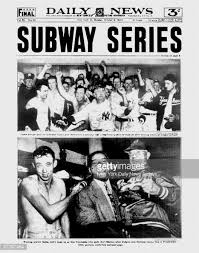
In years past, travel days were employed only when necessary. The famous "subway series" games were played on seven consecutive days.  Why?  Because there was no "travel day" required to go from Brooklyn to the Bronx.  Today, they would put in artificial travel days.

Even fairly long train trips didn't necessarily matter.  The 1948 World Series between the Cleveland Indians and the Boston Braves was played in six consecutive days, October 6 & 7 in Boston, October 8, 9 & 10 in Cleveland, and October 11 back in Boston.

This reflects actual baseball, the way the teams play day-in and day-out, and the kind of unique test that baseball presents to its athletes, its managers and management, and to its fans.

In the modern world of charter planes, teams fly from coast to coast to play games on consecutive days.  The artificial "travel day" should be eliminated so that teams can play in the playoffs in the same way that got them there in the first place.


*All these leagues also have pre-seasons and training camps, which add an additional 6-8 weeks to each player's year.


Email us with your feedback, comments, questions and ideas. 

Religious Issues

Religious Issues

  • Religious Issues
    Coming Soon

Copyright New Mexico Political Journal 2015
EMAIL US WITH YOUR FEEDBACK, COMMENTS, QUESTIONS AND IDEAS

.

Loading...