New Mexico Political Journal
mobile icon
New Mexico Political Journal

.

Show Subnavigation
  • Home
  • About NMPJ
    • About
    • Editor
  • Feedback
  • Advertise on NMPJ

FacebookTwitter

If you read New Mexico Political Journal from a Facebook link, and appreciate the coverage of events, please “like” NMPJ on Facebook.

UPDATE on New Mexico US Senate Race. National Republicans Follow NMPJ Recommendation. Why the Pearce/Yates/Murphy Attacks on Martinez have had Long-lasting Effects

04/24/2019

Following our article on Conrad James a few weeks ago, the national Republican political operatives came to New Mexico and met with the former state representative. They also met with former Lieutenant Governor John Sanchez. We don't have reports of any conclusions reached by any of those involved. As far as we know there were no meetings with the only announced Republican candidate, Gavin Clarkson. 

Why not Susana? Well, We'll Tell You—And It's Not What You Think. 

Susana Martinez, in our view, should be a superb candidate for the US Senate in 2020. After all, she came into office when New Mexico was in the throes of the economic downturn that had begun in 2008. She faced a $450 million structural deficit and she had no choice but to solve that problem immediately, and she did—even with a hostile, uncooperative state legislature.

For eight solid years, despite being attacked every single day by a hostile, unrelenting, constitution-ignoring state senate in the hands of the most recalcitrant, self-centered, political hacks that any governor had to face in the entire US, she persevered. In doing so, she turned a net 53,000 lost jobs in the last three years of the Richardson Administration into a gain of 63,000 PRIVATE SECTOR jobs over the course of her tenure.

And all of this was accomplished during the sluggish, no-growth Obama economy—which, by the way, he said would be permanent, with it being "impossible" that there would ever be anything over 2% growth again. She overcame that too, as New Mexico unemployment fell by 41%: She had inherited an unemployment rate of 7.8%, but when she left office it stood at 4.6%.

Martinez accomplished this with New Mexico being the most dependent state on federal spending. That dependency is the result of decades of bad public policy in New Mexico and it means our economy pays a steep price when the federal government enacts policies like sequestration and government shutdowns.

Recognizing this vulnerability, Martinez was the first governor who truly sought to diversify our economy by growing the private sector, rather than just growing the government. Her bold reforms resulted in the achievements we describe.

She reduced the size of government, cut political appointees, vetoed $130 million in spending and vetoed over $1 billion in tax bills passed by Democrats, while overseeing a doubling of New Mexico's permanent funds to an astounding $23 billion.

She cut taxes and fees 61 times and reduced the corporate income tax rate by 22%, while reducing permit approval time for oil and gas drilling from 8 months to less than two weeks. As a result, the New Mexico oil and gas industry has boomed and Martinez left office with an astounding $2 billion surplus.

She attracted numerous private sector companies including billion-dollar investments from companies like Facebook and Netflix. Her "New Mexico True” state brand led to seven years of record-setting tourism growth in the state and helped create thousands of new leisure and hospitality jobs across the state.

She worked with the Governor of Chihuahua to develop a binational economic corridor around the inland port of Santa Teresa, to which she worked to secure a massive $124 million Union Pacific rail facility.

New Mexico's annual exports increased by over $1 billion during her tenure, and Ernst & Young named New Mexico the best state in the western U.S. for manufacturing, and the Cato Institute recently recognized Governor Martinez with an A+ rating (one of only 5 governors to receive an A grade or better) for:

“…her repeated actions of vetoing wasteful spending and commitment to keeping New Mexico’s general fund budget flat, (in addition to pursuing) tax reforms to make her state more economically competitive, including cutting the state’s corporate tax rate, and consistently rejecting and vetoing tax increases proposed by the legislature.”

With a Record Like That, Why Not Run?

Answer: Look no Farther than Steve Pearce and his Buddies, Yates, Murphy, Billingsley, et. al

Normally a Governor with Martinez's record would be an odds-on favorite, but she isn't. In fact, she isn't even thinking about running. 

Why is that?

We are continuously astounded that even Republicans—active ones who should know better—mutter inane, inaccurate statements about the Martinez Administration. When any of our correspondents ask where these perceptions come from the answer is always traced back to the Steve Pearce crowd.

Pearce, Yates, and the anti-Martinez "Republicans" began sniping (for reasons that are 100% personal and selfish) from the first day she entered the governor's office. Their small gripes have always been readily received by the (largely Democrat-leaning) press and opinion leaders.

But by dint of repetition, they've also taken deep roots with a lot of Republican rank-and-file. And in our continuous probing, they (the rank-and-file) cannot substantiate the gripes. Rather, they "just know [they've] heard them."

Even with our editor speaking to a great Republican crowd in Lubbock this past week, one of the questioners (an elected official no less) alluded to rumors and criticisms he had heard from Pearce.

John Sanchez will Probably Suffer Collateral Damage as a Result

What the Pearce/Yates crowd has done will probably hurt John Sanchez. A Democrat-sympathizing press, having memorized the Yates/Pearce "critique" will be all too happy to apply the same attacks to John Sanchez. True, it will be similar to the way in which Martinez tagged her 2010 opponent Diane Denish with the failures of the Richardson Administration...

BUT at least those criticisms were from a Republican to a Democrat—they were driven by genuine differences in political philosophy. What the Pearce crowd has succeeded in doing is have "Republicans" falsely accuse a Republican of having had a "failed" administration. In so doing they've simultaneously—and stupidly— tarnished John Sanchez as well.  

None of this was necessary. But this is what New Mexico now has.

For our part, because of the Pearce/Yates sniping, we continue to see Conrad James as the best possible alternative at this stage. Our previously-mentioned suggested CD 2 candidate, Claire Chase, could also emerge as a very viable alternative. But the Pearce crowd has probably done too much damage to the Martinez-Sanchez Administration for either the former governor or former lieutenant governor to survive what is sure to be considerable bashing by the Democrats and their opinion allies in much of the mainstream media.

Meanwhile, What is the Pearce Crowd Doing at the Republican Party of New Mexico?

As if leading the RPNM to the most catastrophic defeat in state history isn't enough, the Pearce-ites at party headquarters sit idly by, just watching political events unfold and saying nothing. Just this week the Albuquerque Journal reported that Governor Grisham is calling UNM regent Doug Brown to tell him to raise tuition (so it can help match her overspending).

If Martinez had called, say, Rob Doughty, the Journal and New Mexican would have been all over that like it was an impeachable offense. They would run articles about it for four or five consecutive days. There would be editorials condemning it as if it were an impeachable offense. That's what they, in fact, did do—about far less significant issues regarding Republican appointees.

Under competent leadership, the RPNM right now would be raising hell, at least pointing out the inconsistency in news coverage. They would also point out how Grisham's budgets are bloated and New Mexico students (and their parents) suffer collateral damage from her tax and spend carpet bombing of the state.

And Albuquerque City Councilor Pat Davis proposes giving away $250,000 to left-wing non-profits to "aid asylum seekers." That's outrageous, especially considering the needs of native New Mexicans—the homeless, at-risk kids, and myriad problems right here in the state. (In addition to the fact that no one coming from Central America actually meets the requirement for asylum.)

In the wake of these and countless other news items RPNM is silent—apparently, they're too busy concocting stories about someone spray-painting the HQ building. (Instead of speaking on behalf of New Mexico conservatives, RPNM staffers Anissa Tinnin, Stella Padilla, and Dinah Vargas, not unlike OJ, are out searching for the "real vandals.") Sigh.

And a catastrophic Pearce-engendered redistricting session is just around the corner while RPNM is broke. 

In short, the RPNM is being run just as it was under the incompetent Cangiolosi/Yates regime, as if it were nothing more than a "Steve Pearce for _________ Committee." (Who knows what?)

No money, no funding, no infrastructure, no guidance, no leadership, and no message—the same "plan" that led to the loss of the House of Representatives and the overwhelming Leftist majority in Santa Fe.

Meanwhile, the Democrats continue to implement their plans to establish a permanent Democrat majority. 


Email us (at nmpj@dfn.com) with your feedback, comments, questions and ideas.


Intelligent Political Discourse—for the Thoughtful New Mexican


back to list
National Issues

National Issues

Democrats

2016 Presidential Campaign - Democrats

Republicans

2016 Presidential Campaign - Republicans

Jeb Bush gets religion.

"They said he got religion at the end, and I'm glad that he did."  — Tom T. Hall. The Year Clayton Delaney died.

Well, it's official.  Jeb Bush has changed quite of few of his positions on illegal immigration.  The single most significant is that he no longer endorses the "path to citizenship" for those who came here illegally. 

This is, after all, the key portion of any proposal aimed at "reforming" our existing illegal immigration situation.

No sensible citizen can see any point in trying to deport between 12 and 16 million people currently living in America illegally.  And no candidate for any office that we know of supports that.  What the average American wants is for the country to "get a handle on it."  They want it stopped, our borders secured and future illegal immigration prevented.  It is a national security issue.

The Path to Legal Status

The only way to accomplish the above goals, is to identify current illegal immigrants, get them accounted for, have them documented, and placed on a path to legal status.  Neither they nor their children or spouses should live in a state of fear or anxiety.

But a path to "citizenship" is not the right course.  It is not morally or legally correct.  A merciful and compassionate nation can provide the safeguards of legal status without sending the message to the rest of the world that all you have to do is cross our border and you will eventually get to become a citizen, thus circumventing the legal framework scores of millions of Americans have followed, honored and respected.

If someone who is granted legal status eventually wants to become a citizen, that person should have to return to his or her country of origin and wait in line like 20 million people around the world are doing at any given time.  Failing that, America will forever send the signal that anyone in the world can "jump the line," and that there is no reason at all to obey our immigration and naturalization laws.

We Like Jeb Bush

We are glad Jeb Bush has learned this lesson.  He is a fine speaker, and can eloquently explain his positions on complex issue.  If he were not named "Bush" he would be an actual top tier candidate—in all that that title would entail, including likelihood of acceptance and support of and from the American people in the primaries, and in any theoretical general election.  

We also recognize that he already is a de facto top-tier candidate because of his fame and his fundraising.

If he were to be the nominee of the Republican Party we would heartily support him and endorse him.  We hope, however, that he is not, as he does not give the center-right coalition the best chance of winning.

Media Watch

Media Watch

County Government News

County Government News

Cities, Towns and Villages

Cities, Towns and Villages

Judicial Watch

Judicial Watch

Movies, Television, Pop Culture

Movies, Television, Pop Culture

  • Movies, Television, Pop Culture
    Selma   ????? We have now seen the Oscar-nominated movie Selma.   Our earlier allusion to criticism that sounded as though it was in an Oliver Stone category for historical fabrication is some...

Sports

Sports

The Major League Baseball Playoffs are not realistic, and destroy the actual meaning of the sport. 

Major League Baseball is unique in this respect—its postseason is markedly different from the way the game is played normally.  No other major league sport suffers from this flaw.

Not that much is wrong with baseball. In some respects it's the most well thought-out sport there is.  The "perfect game" many aficionados say.

But the Major League Baseball postseason experience is unique in the world of professional sports, and not in a good way. 

In fact the playoffs are flawed in such a way as to detract from the sport itself and diminish the game and what it means to be the world champion of the sport. 

Among the Big Four team sports of North America: football, hockey, basketball and baseball—and all the 122 professional major league teams competing in the NFL, NHL, NBA and MLB respectively—it is in baseball alone that the postseason turns the sport itself on its head and makes it reflect something that it is not.  This article will explain why that happens and why it is wrong-headed.


Background on the The Frequency of Play

The 30 teams in both the National Hockey League and the National Basketball Association teams play a very similar schedule.  On average, each team has a day off between games, sometimes two days off.  Though there are back-to-back games, they are relatively infrequent.  NBA teams play between 14 and 22 back-to-back games a season, and for the NHL it usually ranges between 9 and 19. The NFL has a full week between games, the exception being the new Thursday games that each team plays once, leaving them only four days' rest once a year.

But baseball players play every single day.  Ten days straight, then a day off, then seven more games, then a day off, then ten more games.  Typically a baseball team plays 27 games every 30 days.  For the NHL and NBA it would be 14 per month, and for the NFL the number would be 4.


Getting to the Playoffs:  It's a grind

In all four sports, getting to the postseason requires a total team effort—in fact an all-out total organizational effort.  Teams must be deep, have bench strength and the capability of moving players in and out of the lineup, and on and off the roster, who can take the place of key players who go down for an injury, or who have to miss games for whatever reason.  While this is true of the other three major sports as well, it is most certainly even more of a concern for baseball teams because of the sheer volume of games in which a team must field a competitive lineup.

Each league's regular season* is a marathon, not a sprint.  NFL teams play for 17 weeks, 16 games.  The NHL has an 82-game season over six months, paralleled by an NBA season of 84 games over the same timeframe. Baseball is the biggest marathon of all—a true test of resilience and endurance—162 games usually starting around the beginning of April and finishing about the end of September.

NHL teams carry 23-man rosters, of which 20 can be active for any particular game.  The NBA is similar, with 15-man rosters of which 13 can be on the bench for a given game. In the NFL, the teams have 53 players on a roster, but only 46 can suit up on game day.  In Major League Baseball, teams have a 25-man active roster, and all 25 are at the park every day.


The Postseason Playoffs:  Sport by Sport

The National Football League:

Of the 32 teams, 12 qualify for the playoffs.  The playoffs are conducted in the exact same manner as the regular season.  Each team plays once a week, the exception being that the four top teams get the first week off.  For a typical qualifier to reach the Super Bowl, the team must play three consecutive weeks.  At that point both remaining teams have two weeks off before the Super Bowl.

In short, the playoffs, with a game each week, reflects the same means of advancement as is present in regular season grind.

The National Hockey League: 

16 of the 30 teams qualify for the postseason.  The playoffs are conducted in the exact same manner as the regular season: a game, a day off, a game, a day off, a game, a day off, and so on.  Just as in the regular season, there are occasionally two days off.  But the playoffs require the same stamina, the same approach as that required to make the playoffs.


The National Basketball Association

16 of the 30 teams qualify for the postseason.  The playoffs are conducted in the exact same manner as the regular season: a game, a day off, a game, a day off, a game, a day off, and so on.  Just as in the regular season, there are occasionally two days off.  But the playoffs require the same stamina, the same approach as that required to make the playoffs.

Major League Baseball

10 of the 30 teams qualify for the postseason.  (Although four of those teams qualify only for a one-game do-or-die play-in game.)

Here is where all similarity to baseball ends. 

Unlike the other three sports whose playoffs mirror the test of the regular season, and whose conditions are the same as the regular season, Major League Baseball playoffs in no way resemble the sport itself.  In hockey, basketball and football, the teams win playoff games and reach the pinacle of the sport in exactly the same way that they qualify to try to do so. 

Not so in baseball.  They are two entirely different concepts.  Teams make the playoffs only because they have depth, five-man pitching rotations and can play day-in and day-out at a high level.  But the baseball playoffs suddenly become a kind of "all-star" game within each team's roster.  MLB playoffs are conducted in a way that more closely follows the NBA and the NHL.  Teams have enormous numbers of days off. 

Here's the key point:  No Major League Baseball team could even qualify for the postseason if they played the same way during the regular season that they do in the playoffs.  None.

In the regular season Major League Baseball teams have to use a 5-man starting rotation, with pitchers pitching every 5th day.  There are not enough days off to have even a four-man rotation, let alone a team with three pitchers.  Even the best team in baseball using only a 4-man rotation, would wear them out, and most likely end up with a record of something like 66-96, or 70-92—and that would be if they were otherwise teh best team in the sport.
 

The 2014 Baseball Postseason is Typical

As examples, last year's World Series teams the Kansas City Royals played only 15 games in 30 days, and the San Francisco Giants played only 17 games in 30 days.  The 12 to 15 days off in the non-baseball fantasy world of the MLB postseason, means that teams can turn to three pitchers and give all of them plenty of rest.  But it isn't the way baseball really works.

At one point, the Royals had 5 consecutive days off, and the Giants had 4.  This never happens in the regular season.  Even the All-Star break is only three days.  Very rarely is there anything beyond a one-day break, and even that happens only a couple of times a month. 

What this means is that neither team used the team that got them to the playoffs.  (The NFL, NBA and NHL teams ALL used the very same teams that got them to the playoffs.) 

Baseball teams use a three-man pitching rotation in the playoffs.  Sometimes, they essentially opt for two pitchers only—conceding the likelihood that some of their games are going to be lost—when their third-, or rarely fourth-best pitcher has to face one of their opponents' two-man or three-man rotation members. 

Imagine an NFL team using only one running back and three wide receivers, instead of rotating through their roster in the course of a playoff game—or using only 4 defensive backs and 4 linebackers, instead of rotating 8 or 9 DBs and 6 or 7 linebackers?  In hockey, would a team use only two or three of their forward lines?  Would an NBA team use only the starting five?  They would never make the post season if they tried to present that product to their fans during the regular season.

Those are the equivalents of what Major League Baseball sets up every fall.  No other sport drags its playoffs out in such a way as to completely change the playing field—completely change the dynamics of its game.

Why Does Baseball Do This?

MLB does this because the TV networks want to drag out the games so that they can try to have one game each day  This requires an unnecessary staggering of games, and creates the phenomenon of 15 off-days in a month.

What about travel days?

What about them?  Baseball has travel days constantly.  A team may play in Chicago one day and in Miami the next, or in New York one day and Phoenix the very next day.  Travel days as a routine part of the game are again, a phenomenon of television, and stretching out the playoffs.
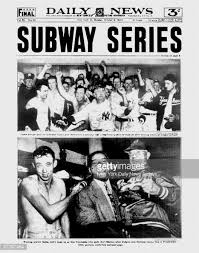
In years past, travel days were employed only when necessary. The famous "subway series" games were played on seven consecutive days.  Why?  Because there was no "travel day" required to go from Brooklyn to the Bronx.  Today, they would put in artificial travel days.

Even fairly long train trips didn't necessarily matter.  The 1948 World Series between the Cleveland Indians and the Boston Braves was played in six consecutive days, October 6 & 7 in Boston, October 8, 9 & 10 in Cleveland, and October 11 back in Boston.

This reflects actual baseball, the way the teams play day-in and day-out, and the kind of unique test that baseball presents to its athletes, its managers and management, and to its fans.

In the modern world of charter planes, teams fly from coast to coast to play games on consecutive days.  The artificial "travel day" should be eliminated so that teams can play in the playoffs in the same way that got them there in the first place.


*All these leagues also have pre-seasons and training camps, which add an additional 6-8 weeks to each player's year.


Email us with your feedback, comments, questions and ideas. 

Religious Issues

Religious Issues

  • Religious Issues
    Coming Soon

Copyright New Mexico Political Journal 2015
EMAIL US WITH YOUR FEEDBACK, COMMENTS, QUESTIONS AND IDEAS

.

Loading...